A floor that feels springy underfoot or skirting that crumbles when pressed can raise an immediate question: is it dry rot or wet rot? When people search for dry rot vs wet rot, they usually want a simple answer, but the right diagnosis matters because these two forms of timber decay do not behave in the same way and should not be treated as though they do.
Both are caused by fungal activity in timber with elevated moisture levels. The confusion starts because the visible signs can overlap. Timber may darken, soften, crack, or lose strength in both cases. The difference lies in the conditions each needs, how far the decay can spread, and how extensive the remedial work may need to be.
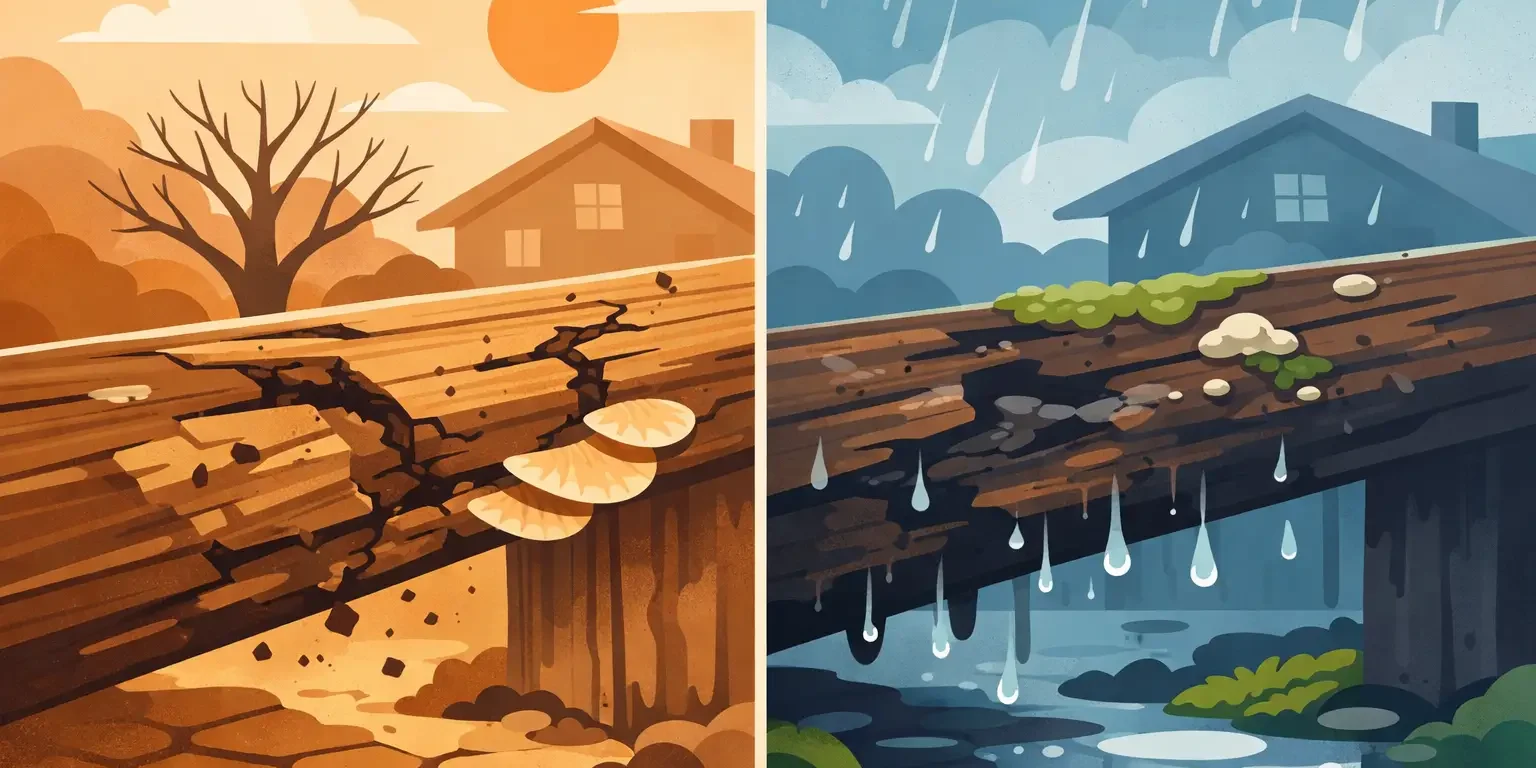
Dry rot vs wet rot: the main difference
Wet rot is the more common form of timber decay. It develops where timber remains damp over time, usually because of a local moisture source such as a plumbing leak, defective guttering, penetrating damp, failed seals around a shower, or poor ventilation in a persistently humid area. In most cases, wet rot stays close to the source of moisture. If you remove that source and replace badly affected timber, the problem is often relatively contained.
Dry rot is generally the more serious issue. Despite the name, it does not grow in dry timber. It starts where there is enough moisture for fungal growth, but once established it can travel beyond the original wet area. That is why dry rot tends to cause more concern in floors, roofs and concealed structural timbers. It can spread through a building fabric more aggressively than wet rot if conditions allow, particularly in poorly ventilated voids.
So the short version is this: wet rot usually indicates timber that has stayed wet in one area, while dry rot can become a wider building defect with a greater capacity to spread.
What causes wet rot?
Wet rot needs timber to remain damp for a sustained period. That could be as straightforward as a leaking pipe under a kitchen floor, or as gradual as rainwater getting into a window frame year after year. Bathrooms, cellars, external joinery, roof timbers and sub-floor voids are common locations.
The key point is that wet rot is moisture-led. Timber does not start to decay without a reason. If the cause of damp is missed, simply splicing in new wood or painting over affected areas will not solve it for long.
In practice, we often find wet rot alongside other moisture issues. A blocked gutter might be saturating a wall. A raised external ground level might be bridging damp protection. Condensation and poor airflow may be making an already marginal area worse. That is why a proper survey matters. You are not just identifying damaged timber – you are tracing the route the moisture took to get there.
What causes dry rot?
Dry rot is associated with a specific fungal decay that can survive in hidden parts of a building where timber is damp and ventilation is poor. Typical starting points include leaking roofs, defective masonry, plumbing leaks, damp sub-floor voids and areas where timber is built into wet walls.
Once active, dry rot can produce grey-white fungal growth, brittle cuboidal cracking in the timber and, in some cases, strands that allow it to move across adjacent surfaces in search of more timber to feed on. This is one reason dry rot has the reputation it does. It is not simply a bit of soft wood near a leak. Left untreated, it can affect a much wider area than first appears visible.
That said, not every serious-looking timber decay problem is dry rot. Property owners sometimes assume the worst because the term is well known. A reliable diagnosis should come from inspection, moisture assessment and experience, not guesswork.
How to tell wet rot and dry rot apart
This is where caution is needed. There are signs that point one way or the other, but rot is not always easy to identify from appearance alone.
Wet rot timber is often darkened, softened and fibrous. Painted surfaces may blister, and the timber may feel spongy in places. Because the damage is usually tied closely to a moisture source, you often see the worst decay exactly where the leak or damp ingress has been happening.
Dry rot timber is more likely to become brittle and crack into cube-like sections as it dries out. Fruiting bodies and fungal growth may be present, though not always. In concealed areas, there may also be a mushroom-like smell. The spread can seem disproportionate to the obvious damp patch, particularly beneath suspended floors or behind finishes.
Even so, visual clues only take you so far. Wet rot can look severe. Dry rot can be missed in early stages. Different fungi can present differently depending on the timber species and environment. If the timber is structural, hidden, or linked to a property sale or insurance matter, an informed survey is the safest route.
Which is worse?
If you are comparing dry rot vs wet rot in terms of severity, dry rot is usually considered the more serious of the two because it can extend further and lead to more extensive opening-up, timber replacement and environmental correction.
But that does not mean wet rot should be dismissed. A wet rot problem in a structural beam end, roof timber or floor joist can still lead to significant repair work. A localised defect left untouched for long enough can become costly, especially if the moisture source continues unnoticed.
The real question is not only which type of rot is present, but how long it has been active, what timber has been affected, and whether the moisture source is still ongoing.
Does treatment differ?
Yes, although both start with the same principle: stop the moisture.
With wet rot, remedial work often focuses on identifying and fixing the defect that allowed timber to stay damp, improving drying conditions, and replacing timber that has lost structural integrity. If the surrounding area is otherwise sound and the moisture source is resolved, the repair can be fairly straightforward.
Dry rot treatment is usually more involved. The affected area may need careful opening-up to establish the true extent of spread. Decayed timber is removed, replacement timber is installed where needed, and surrounding materials may require treatment depending on the findings. Just as important is correcting the environmental conditions that allowed the outbreak in the first place – poor ventilation, trapped moisture, masonry defects or plumbing issues.
This is where a joined-up service can make life easier. Diagnosis, remedial treatment and reinstatement all need to work together. There is little value in identifying dry rot accurately if the follow-on works are fragmented or the original moisture defect is left unresolved.
When should you arrange a survey?
You should not wait until timber fails completely. If you have noticed stained skirting, decaying floorboards, a musty smell, cracking timber, or signs of long-term damp around joinery or structural wood, it is sensible to have it checked. The same applies if a buyer’s survey has mentioned possible fungal decay, or if a mortgage lender, insurer or managing agent wants specialist reporting.
Older buildings deserve particular care because decay is often concealed. Timber ends built into masonry, suspended timber floors and roof spaces can all hide problems that are not obvious from the room below. Coastal conditions in parts of Devon and Cornwall can also add pressure through driving rain, salt exposure and persistent moisture, particularly where maintenance has slipped.
A specialist survey should do more than label the problem. It should explain the cause, the extent, the risk to the property, and the practical repair options. That gives owners, buyers and landlords a clearer basis for decision-making.
Common mistakes to avoid
The biggest mistake is treating rot as the problem rather than the result. Rot is what happens after moisture has been present for too long. If the leak, damp ingress or ventilation issue remains, decay is likely to return.
Another common mistake is relying on surface appearance alone. Fresh paint can hide damaged joinery. Dry-looking timber can still be unsound beneath. Equally, not every discoloured area is active rot. Assumptions can lead to either unnecessary alarm or costly delay.
There is also a temptation to patch over isolated symptoms. Replacing one board may make sense in a genuinely local wet rot case. In a dry rot scenario, it may do very little if fungal spread has already reached beyond the visible edge of damage.
If you are weighing up dry rot vs wet rot, the most useful next step is not to guess which sounds less serious. It is to find out why the timber has decayed, how far the issue extends, and what repair approach will properly put it right. A clear survey now can save a great deal of disruption later.