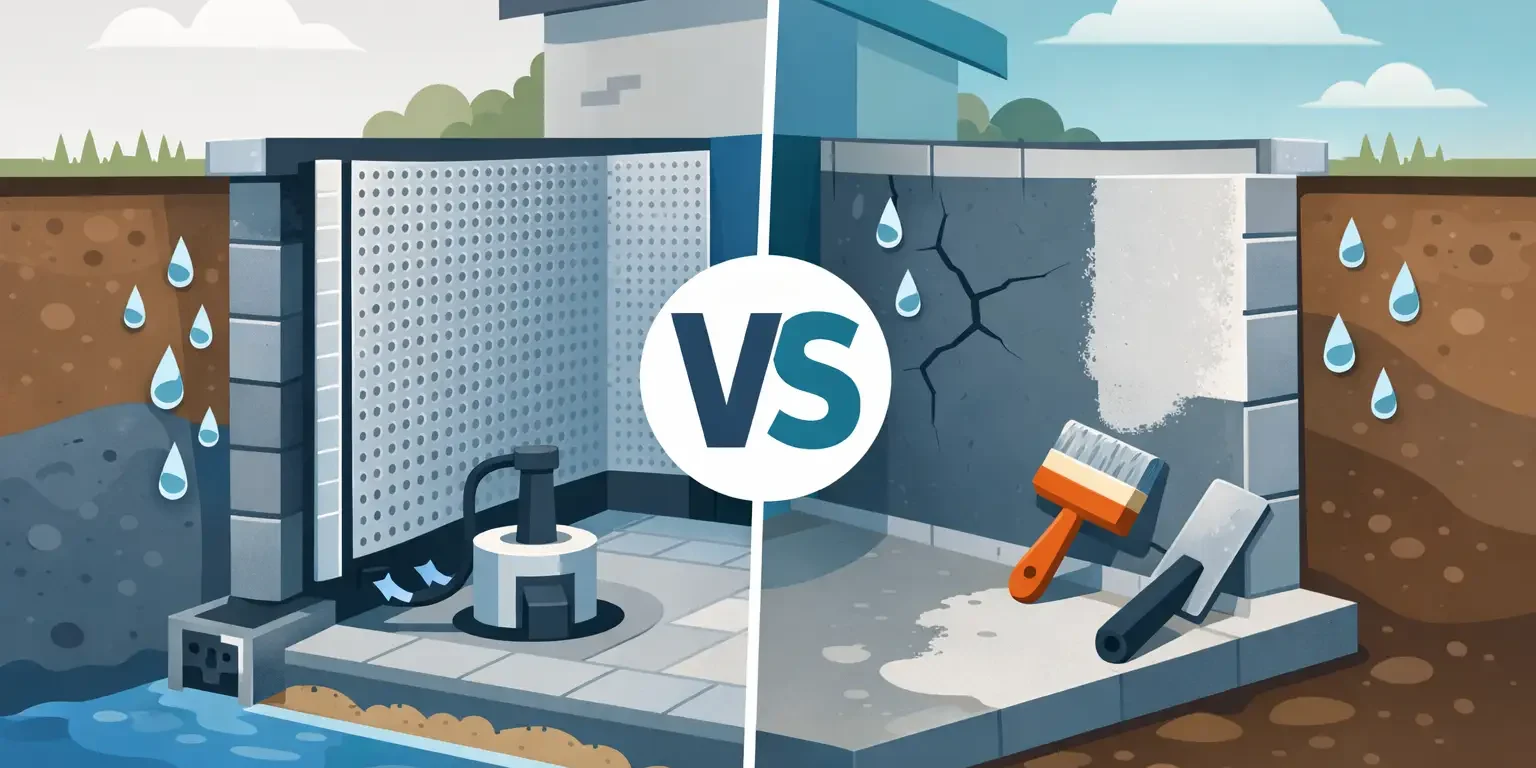
A damp basement is rarely solved by applying a product to a wall and hoping for the best. The choice between cavity drain membrane vs slurry affects how water is managed, the disruption involved, the future maintenance required and the reliability of the finished room.
Both systems can form part of an effective waterproofing design. They work in very different ways, however, and neither is automatically the right answer for every cellar, basement conversion or below-ground room. The condition of the structure, the source of moisture and the intended use of the space all need to be considered before work begins.
What is waterproofing slurry?
Waterproofing slurry is a cement-based coating applied directly to masonry, concrete or suitably prepared render. Once cured, it creates a barrier intended to resist water passing through the wall or floor. This approach is commonly known as tanking.
For slurry to perform properly, the background must be sound, clean and prepared correctly. Existing plaster, paint, salts, loose mortar and other contaminants usually need to be removed. Cracks, joints and wall-to-floor junctions require particular attention, as these are common points of weakness.
A slurry system can be a practical choice where there is a stable masonry background and water pressure is limited or well understood. It can also suit smaller areas where excavation for an external waterproofing system is not possible.
The main consideration is that slurry asks the building fabric itself to resist water pressure. If water finds a route around, behind or through the coating, the problem may reappear. Movement in older properties, changes in ground conditions and defects at junctions can all affect performance.
Where slurry is often suitable
Slurry may be considered for a sound, relatively simple below-ground structure where the wall construction can be thoroughly prepared and the proposed room use does not demand a highly serviceable internal finish. It can also be used as part of a combined waterproofing strategy rather than as the sole defence against water.
It is not a shortcut. Applying slurry over damp plaster, painted walls or crumbling masonry is unlikely to provide a dependable result. The preparation work is as important as the coating itself.
What is a cavity drain membrane system?
A cavity drain membrane does not try to stop all water entering the structure. Instead, it creates a controlled void between the damp wall or floor and the internal finish. Any water reaching the structure is directed behind the membrane into a drainage channel, then to a suitable drainage point or sump and pump system.
This is known as a Type C drained protection system. The membrane is fixed mechanically to the walls and can be laid across the floor, creating a dry internal environment without relying on a cement coating bonded directly to the masonry.
The key difference is one of approach. Slurry resists water at the surface of the building fabric. A cavity drain system accepts that water may reach the structure and manages it safely before it can affect the room.
For many older properties, this can provide a more forgiving solution. Uneven stone walls, historic masonry, minor movement and variable ground moisture are often easier to accommodate with a drained system than with a rigid barrier coating.
The drainage element matters
The membrane alone is not the full system. Perimeter drainage channels, inspection points, a sump chamber and pumps may all be required, depending on the layout and level of the basement. These components collect and remove water in a controlled way.
A pump-based system also needs ongoing care. It should be accessible for servicing, and an alarm or battery back-up may be appropriate where a failure could cause significant damage. This is a manageable responsibility, but it should be understood before choosing the system.
Cavity drain membrane vs slurry: the practical differences
The most useful comparison is not which product is ‘better’, but how each system responds when water is present.
Slurry is a barrier system. When it remains fully bonded to a sound substrate and is detailed correctly at every junction, it can resist water effectively. Its success depends heavily on preparation, workmanship and the continuing condition of the underlying building fabric.
A cavity drain membrane is a water-management system. It separates the finished room from the damp structure and gives water a planned route away. It is often well suited to basement conversions where a dry, habitable room is required, particularly if the existing walls are old, irregular or likely to experience seasonal moisture movement.
There are also differences in reinstatement. Slurry usually requires a compatible render finish or other suitable internal treatment. A membrane system can support plasterboard or an independent lining, helping to create a neat finish while allowing access to some drainage components where designed appropriately.
Cost should be assessed over the whole project rather than by comparing material prices alone. A slurry treatment may appear less expensive at first, but extensive preparation and reinstatement can add to the work. A cavity membrane system involves drainage design and potentially pumps, but may reduce the need to make imperfect walls suitable for a bonded coating.
When a cavity drain membrane is usually the stronger option
A drained membrane system is commonly considered where a basement is being converted into a living room, office, bedroom, storage area or other valuable internal space. It is also often appropriate where there is evidence of ongoing water ingress, variable ground conditions or masonry that is not suitable for reliable tanking.
It may be particularly helpful in older homes across Devon and Cornwall, where stone construction, solid walls and challenging ground conditions are common. Every property is different, though. A cellar with occasional condensation needs a different response from one affected by lateral water penetration or hydrostatic pressure.
A cavity drain system is not maintenance-free, and it is not a substitute for dealing with obvious defects outside the property. Damaged gutters, overflowing gullies, high external ground levels and leaking drainage should be corrected wherever possible. Good waterproofing starts by reducing the amount of water reaching the building.
When slurry may be the right choice
Slurry may be suitable where the structure is stable, the substrate can be prepared properly and the water pressure is modest. It can be useful in areas where fitting a membrane and drainage channel would be impractical, or where a project calls for a particular finish directly over a prepared background.
It can also play a role alongside other measures. For example, localised slurry treatment may be specified to address vulnerable details before a broader internal waterproofing system is installed.
The risk comes when tanking is selected simply because it sounds simpler. If the wall is wet because of a blocked drain, a structural crack or a high external ground level, coating the internal face without resolving those factors can leave the underlying problem in place.
Why a survey should come before either system
Below-ground damp is not always caused by water penetrating through the walls. Condensation, leaking pipes, defective rainwater goods, bridged damp-proof courses and poor ventilation can all create similar symptoms. Treating the wrong cause wastes money and may make later repairs more difficult.
A proper survey should look at the construction of the property, external ground levels, drainage, visible defects, the condition of internal finishes and how the room will be used. It should also consider whether the proposed waterproofing needs to manage water vapour, liquid water or both.
For basement work, the waterproofing design should account for the level of risk and the consequences if water enters the finished space. A utility cellar has different requirements from a room containing electrical equipment, furnishings or a proposed bedroom.
Choosing a system that can be maintained
The best system is one that suits the property and can be looked after over time. With slurry, that means protecting the finish from damage and responding promptly if signs of failure appear. With cavity drainage, it means keeping drainage channels and pumps serviceable and ensuring access is not lost during later alterations.
Homeowners should be cautious of broad recommendations made without inspecting the property. The same visible damp patch can have several possible causes, and a dependable solution needs to address the actual route water is taking.
Sovereign Preservation approaches basement waterproofing as part of the wider building, not as an isolated product choice. Clear diagnosis, appropriate specification and properly coordinated reinstatement give property owners a far better chance of keeping below-ground rooms dry and usable for years to come.