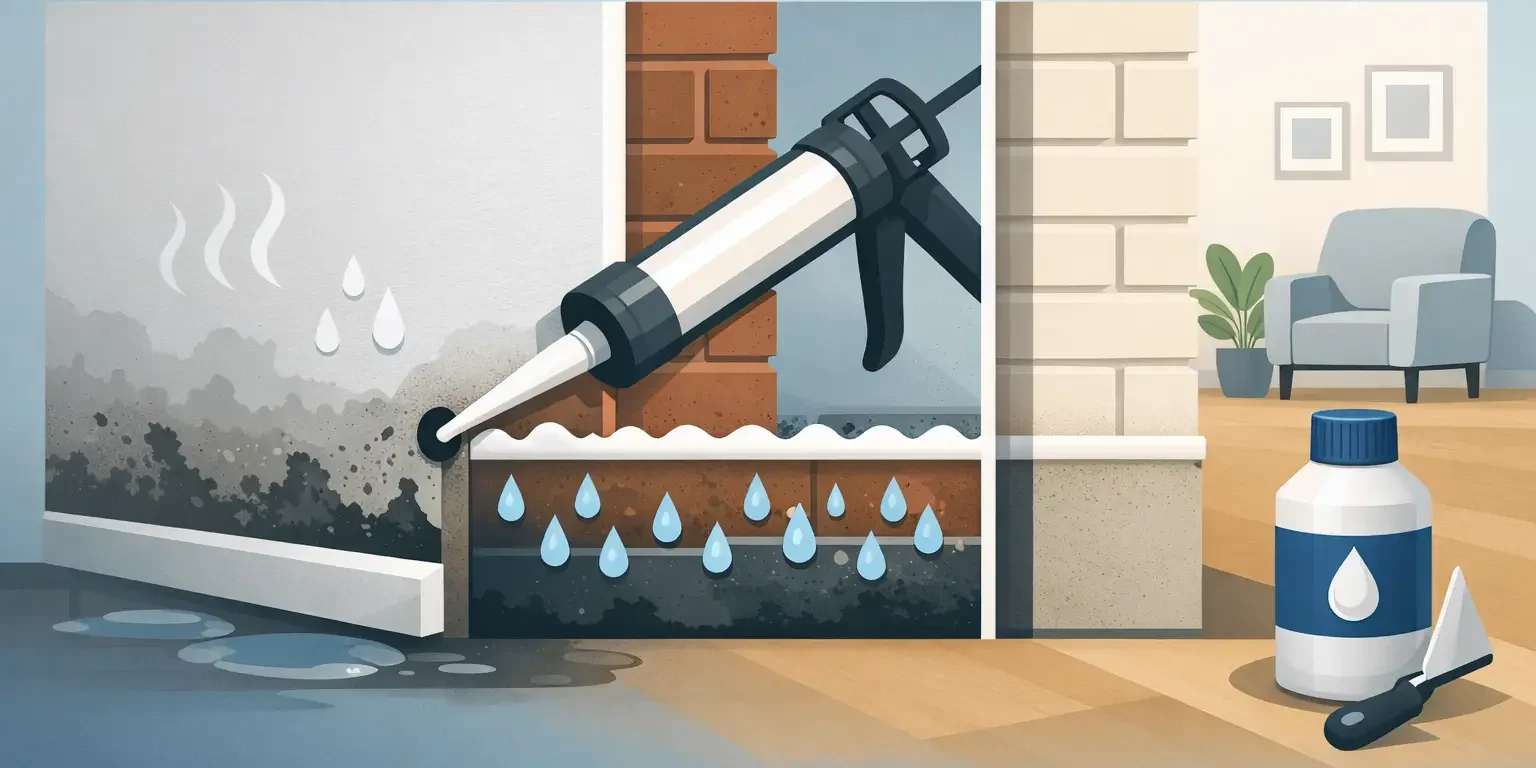
A tub of damp proof cream can look like a straightforward answer to a worrying patch on an internal wall. Apply it, keep rain out, and wait for the wall to dry. The difficulty is that “damp proof cream” is used to describe two very different products, and neither can diagnose why a building is wet. This damp proof cream review explains what these products can realistically achieve, when they are worth considering, and when an inspection is the safer investment.
Damp proof cream review: first identify the product
Most homeowners mean one of two things when they search for damp proof cream. The first is an external masonry water repellent, usually a silane or siloxane-based cream. It is brushed or rolled onto brick, stone or render to reduce rainwater absorption while allowing moisture vapour to escape.
The second is a chemical damp-proof course cream. This is injected into holes drilled along a mortar bed, normally close to ground level, to form a barrier intended to limit moisture rising through the wall. The installation method, the defect it addresses and the potential consequences of getting it wrong are completely different.
That distinction matters. An external water repellent cannot solve genuine rising damp, while injected DPC cream will not stop rain entering through cracked render, defective flashings or open joints around a window. A good result begins with identifying the moisture source, not choosing the most convincing product label.
External masonry creams: a fair assessment
A quality water-repellent cream can be useful on suitable, sound masonry exposed to persistent wind-driven rain. This is particularly relevant in Devon and Cornwall, where coastal weather and driving rainfall can test older solid-wall properties. Unlike a surface coating that forms a visible film, a breathable penetrating treatment is designed to line the pores of the masonry and shed liquid water.
Its main benefit is prevention. If a wall is otherwise in good repair but becomes saturated during prolonged rain, a correctly selected cream may reduce water uptake and help the wall retain its thermal performance. Less saturation can also lower the chance of internal staining, frost damage and repeated decorating repairs.
There are limits. The cream will not bridge cracks, replace missing pointing, repair failed render, cure leaking gutters or deal with a roof defect. It also cannot make unsuitable materials suitable. Some historic buildings need particularly careful consideration because their brick, stone, lime mortar and render rely on breathability. Applying any treatment without understanding the wall build-up can trap moisture or alter how it dries.
Preparation is often the difference between a successful treatment and a disappointing one. The surface must be reasonably clean, dry enough for the specified application, and free from defects that permit water to bypass the treated face. Repointing, render repairs, gutter repairs and checking external ground levels may be more valuable than applying a cream at all.
What to check before applying an external cream
Look beyond the affected internal patch. Is the problem worse after rain, particularly on a south-west-facing elevation? Are rainwater goods overflowing? Has external ground or a patio been raised above the original damp-proof course? Are there cracks in render, eroded mortar joints, blocked cavity trays or failed sealant around openings?
If the answer is yes, deal with those faults first. A water-repellent cream should be part of a considered external repair, not a substitute for one. It is also sensible to check that the product is compatible with the particular masonry and any existing coatings. Dense engineering brick, painted walls and some rendered finishes may need a different approach.
Injected DPC cream: useful, but not a universal cure
Chemical DPC cream is commonly sold as a DIY treatment for rising damp. In the right circumstances, a professionally specified and installed injection system can be an effective remedial measure. The cream is introduced into a consistent horizontal mortar joint, where it disperses and creates a water-repellent zone within the wall.
However, a low-level damp reading is not proof of rising damp. Moisture at the base of a wall can also come from high external ground levels, bridging by internal plaster, leaking drains, condensation, poor sub-floor ventilation, salts left from historic moisture, or rain penetration. Timber decay, where present, adds another reason to establish the source properly.
Older solid-wall buildings can be especially complex. Wall thickness varies, mortar may be loose or irregular, rubble infill can interrupt the intended injection line, and previous repairs may have changed the wall’s behaviour. A cream may be technically sound, yet fail to provide the expected result if the wall has not been prepared and replastered appropriately or if another source of moisture remains active.
This is why the strongest review of injected damp-proof cream is a qualified one: it is a legitimate treatment, not a diagnosis. Beware of anyone promising that a single line of injection will solve every damp issue before they have inspected the property.
Replastering is not merely a cosmetic stage
Where rising damp has brought salts into plaster, the wall may continue to show staining or attract moisture even after the source is controlled. Contaminated plaster may need removing to an appropriate height and replacing with a suitable system. The correct specification depends on the construction and the treatment selected.
Skipping this stage can leave a homeowner believing the DPC has failed when the visible issue is actually salt-contaminated finishes. Equally, stripping and replastering without resolving the moisture source simply gives the problem a cleaner surface to return to.
How to judge a damp proof cream claim
Product marketing tends to focus on coverage rates, drying times and water beading. These details have their place, but they do not tell you whether the product suits your property. Start with the cause and construction, then assess the treatment.
For an external cream, ask whether the manufacturer confirms compatibility with your masonry, whether it remains vapour permeable, what surface preparation is required, and how long its performance is expected to last in exposed conditions. A small, discreet test area can be sensible where appearance or absorption is uncertain.
For an injected cream, the important questions concern the survey findings, the proposed injection height and mortar course, wall thickness, bridging risks, associated plaster specification and guarantee. You should be given a clear explanation in plain English of what is causing the damp and what evidence supports that conclusion.
Price deserves context as well. DIY cream can appear inexpensive because it excludes labour, access equipment, repair work and reinstatement. Professional work costs more, but a well-scoped service should address the full sequence: diagnosis, treatment, associated repairs and making good. That reduces the risk of paying twice for a cosmetic remedy followed by the real repair.
When cream is the wrong answer
Do not rely on either type of damp proof cream where there is an obvious active defect or a risk to the building fabric. A roof leak, defective valley, cracked stack, failed guttering or penetrating pipe needs repair at source. Below-ground water pressure requires a suitable tanking or cavity drainage system, not a brush-on masonry treatment. Condensation calls for a review of ventilation, heating, insulation and everyday moisture production.
Likewise, musty odours, soft skirting boards, distorted floorboards or visible fungal growth should prompt timely professional advice. These can indicate wet rot, dry rot or hidden leaks. Covering the wall with a moisture-resistant finish may delay the discovery of damage to timber and masonry.
The practical route to a lasting repair
If a damp mark has appeared recently, observe when it worsens and take photographs after heavy rain. Check simple maintenance points such as gutters, downpipes and external ground levels, but avoid sealing, injecting or replastering the wall before the cause is understood. Early cosmetic work can make a later survey less straightforward.
For persistent damp, a pre-purchase concern, or any sign of decay, a detailed damp and timber survey offers far more value than choosing a product from a shelf. At Sovereign Preservation, the aim is to explain the cause, recommend only the work that is needed and coordinate treatment with the associated building repairs where required.
A damp proof cream can be a very good component of the right specification. Give it a specific job, rather than asking it to solve a problem that has not yet been properly identified.