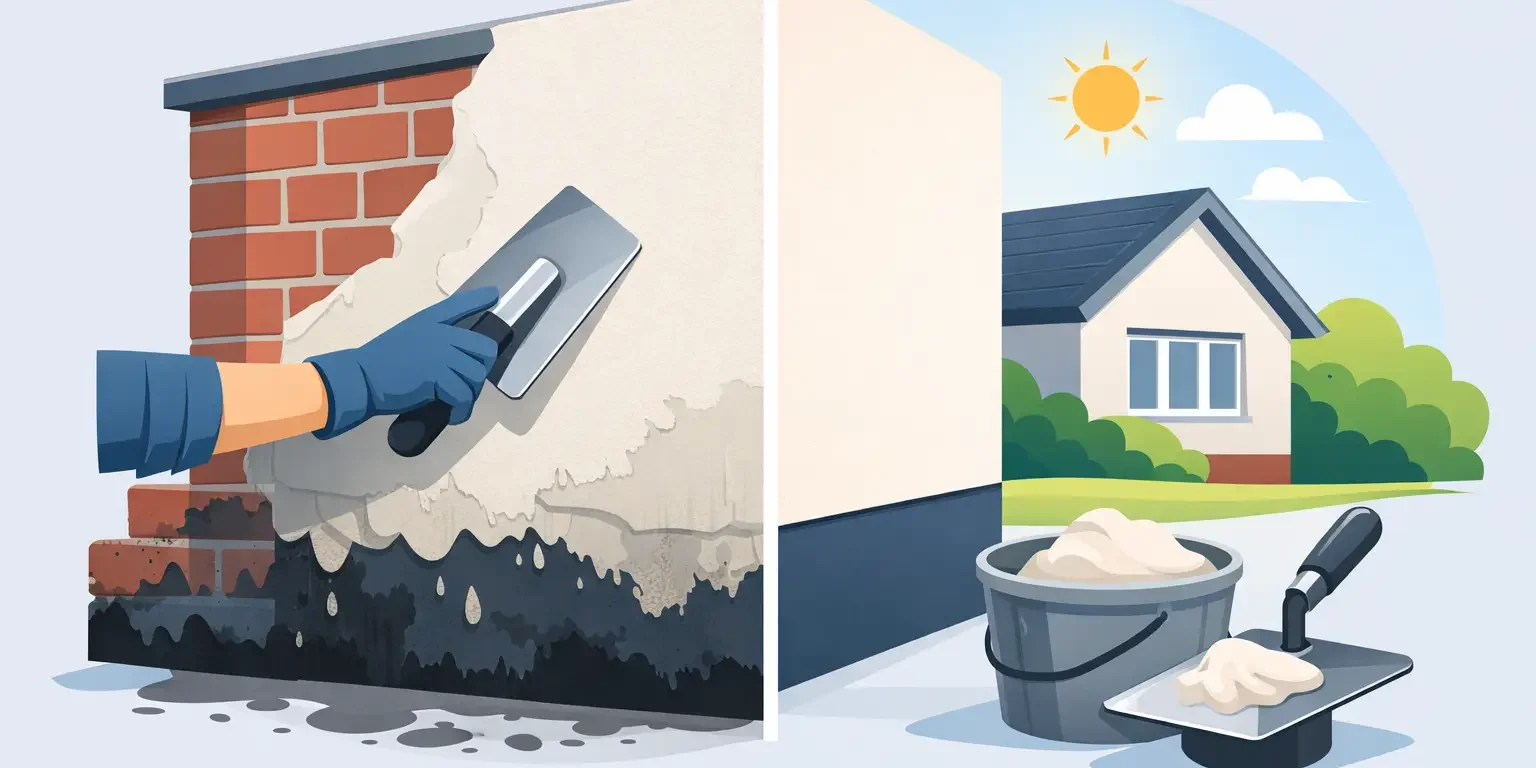
A damp treatment may solve the source of moisture, but the work is not complete when the treatment has been installed. Rendering after damp treatment is the stage that restores the wall, protects the repair and provides a sound surface for decoration. Done too soon, or with unsuitable materials, it can lead to staining, blown plaster and the impression that the original problem has returned.
The right approach depends on why the wall became damp, the construction of the property and the treatment used. A sound diagnosis should always come first. Reinstatement is not simply a cosmetic finish – it is part of making the repair last.
Why rendering after damp treatment matters
Damp often leaves more behind than visible moisture. When groundwater or rising damp moves through masonry, it can carry salts into the plaster and render. Even after a new damp proof course or another effective treatment has been completed, those salts may remain within the wall fabric.
If contaminated plaster is left in place, or if a standard finish is applied directly over it, salts can draw moisture from the air. This can produce recurring tide marks, powdery deposits and damaged decoration despite the underlying damp problem having been addressed.
Removing defective or salt-contaminated finishes and applying a suitable replacement render helps prevent this. It also gives the wall a level, durable surface ready for plastering, decorating or final finishes. The specification matters as much as the application: an incompatible mix can restrict drying or allow salts to affect the new surface.
First, make sure the cause has been resolved
A wall should not be rendered merely because it looks damp. The source must be identified and dealt with first. In older properties, several issues can look alike, including rising damp, penetrating damp, condensation, leaking gutters, defective pointing or bridged damp proof courses.
For example, a chemical damp proof course may be appropriate where rising damp has been properly diagnosed in a solid masonry wall. It will not fix rainwater entering through cracked render, failed flashings or an overflowing gutter. Likewise, improving ventilation may be central to a condensation issue, but it will not stop moisture entering through an external defect.
This is why a professional survey is valuable before reinstatement begins. It establishes the moisture mechanism, identifies any associated timber risk and sets out the treatment and finishing work required. Covering over symptoms before this point can make later investigation more disruptive and more expensive.
What happens before new render is applied
Once the moisture source has been addressed, the affected wall needs careful preparation. This usually involves removing plaster and render that is damp-damaged, loose or contaminated by salts. The extent of removal depends on the diagnosis and the condition of the existing finishes, rather than a one-size-fits-all measurement.
The exposed masonry is then inspected. Loose mortar, damaged brickwork, cracks and open joints should be repaired before the new system is applied. Any debris and dust must be cleared away so the render can bond properly.
Where a damp proof course has been installed, the reinstatement specification will normally be designed to work with it. This may include a specialist render system that resists salt migration and provides a sound base for the next stage of finishing. Skirting boards, joinery and electrical fittings may also need temporary removal to allow the work to be completed properly at low level.
Good preparation can feel like the slow part of the job, particularly when a room is out of use. It is also the point at which a lasting repair is won or lost.
Choosing the right render system
There is no universal render suitable for every treated damp wall. The right material depends on the building, the nature of the damp and whether the wall is internal or external.
For internal walls affected by rising damp and salts, a specialist renovating render or a correctly specified sand-and-cement system may be used. The aim is to provide a durable finish that manages residual salts and does not fail prematurely. The exact mix, coats and thickness should follow the treatment system and the survey findings.
Older solid-wall properties may need particular care. Some traditional buildings benefit from breathable, lime-based materials where the wall must continue to release moisture vapour. Applying a dense modern render to an unsuitable historic wall can trap moisture and move the problem elsewhere. Conversely, lime is not automatically the right answer for every damp repair. The treatment method and background condition must guide the decision.
External rendering is a separate consideration. External render should protect the building from weather while allowing the wall construction to perform as intended. If penetrating damp has occurred, defects in the external finish, roofline goods, pointing or ground levels need addressing before a fresh render coat is considered.
How long should you wait before plastering and decorating?
This is one of the most common questions after damp work, and the honest answer is that it depends. A treated wall needs time to dry, but the required period is influenced by wall thickness, masonry type, weather, ventilation, the level of previous saturation and the materials used during reinstatement.
New render also needs sufficient curing time before it is plastered or decorated. Rushing to apply paint, wallpaper or impermeable finishes can hold moisture in the wall and cause peeling, staining or poor adhesion. A newly restored room may look ready before the wall is genuinely ready for its final finish.
Your contractor should give clear guidance for the specific system used. Keep the area ventilated, maintain a reasonable indoor temperature and avoid drying the wall too aggressively with intense direct heat. Gentle, consistent conditions are generally more helpful than trying to force rapid drying.
For decoration, breathable finishes are often the sensible choice while a wall continues to dry. Avoid vinyl wallpapers and non-breathable coatings until the wall has reached an appropriate condition. If there is any uncertainty, it is better to delay the final decoration than to undo careful remedial work.
Common mistakes that cause repeat damage
The most frustrating failures after damp treatment are often avoidable. Applying gypsum plaster directly to a wall affected by salts, using an unsuitable render mix or decorating too early can all spoil an otherwise effective repair.
Another common issue is bridging the damp proof course. External paths, soil or raised flower beds should not sit above the damp proof course or create a route for moisture to bypass it. Internally, poorly planned floor screeds, plaster finishes or debris in a cavity can also compromise the intended protection.
It is equally important not to ignore maintenance. A repaired internal wall will still suffer if rainwater continues to run down a defective gutter or if external ground levels direct water against the property. Damp treatment and building maintenance work together.
Coordinating treatment and reinstatement
Homeowners often face an awkward handover after specialist damp work: one contractor diagnoses and treats the issue, then separate trades are needed for rendering, plastering, skirting, decoration and any joinery repairs. This can create delays and confusion over who is responsible if a finish fails.
Using a contractor able to manage both preservation work and the associated building reinstatement can make the process clearer. At Sovereign Preservation, the survey findings can be carried through into the treatment and restoration works, helping ensure that the render specification matches the diagnosis rather than being selected on appearance alone.
For landlords, buyers and property managers, clear records are useful too. Keep the survey report, treatment details, guarantee information and any advice on drying and decoration. These documents can support future maintenance decisions and provide reassurance during a sale, tenancy or insurance discussion.
When should you ask for further advice?
Seek advice if staining returns soon after rendering, the new finish becomes soft or detached, white salt deposits appear repeatedly, or a musty smell persists. These signs do not always mean the original treatment has failed. They may point to residual drying, a separate moisture source, condensation or an unsuitable finish.
A wall that has been treated and rendered correctly should not be a source of ongoing worry. Give it the specified time, use appropriate finishes and deal promptly with any external maintenance defects. That patience protects both the workmanship and the property for years to come.