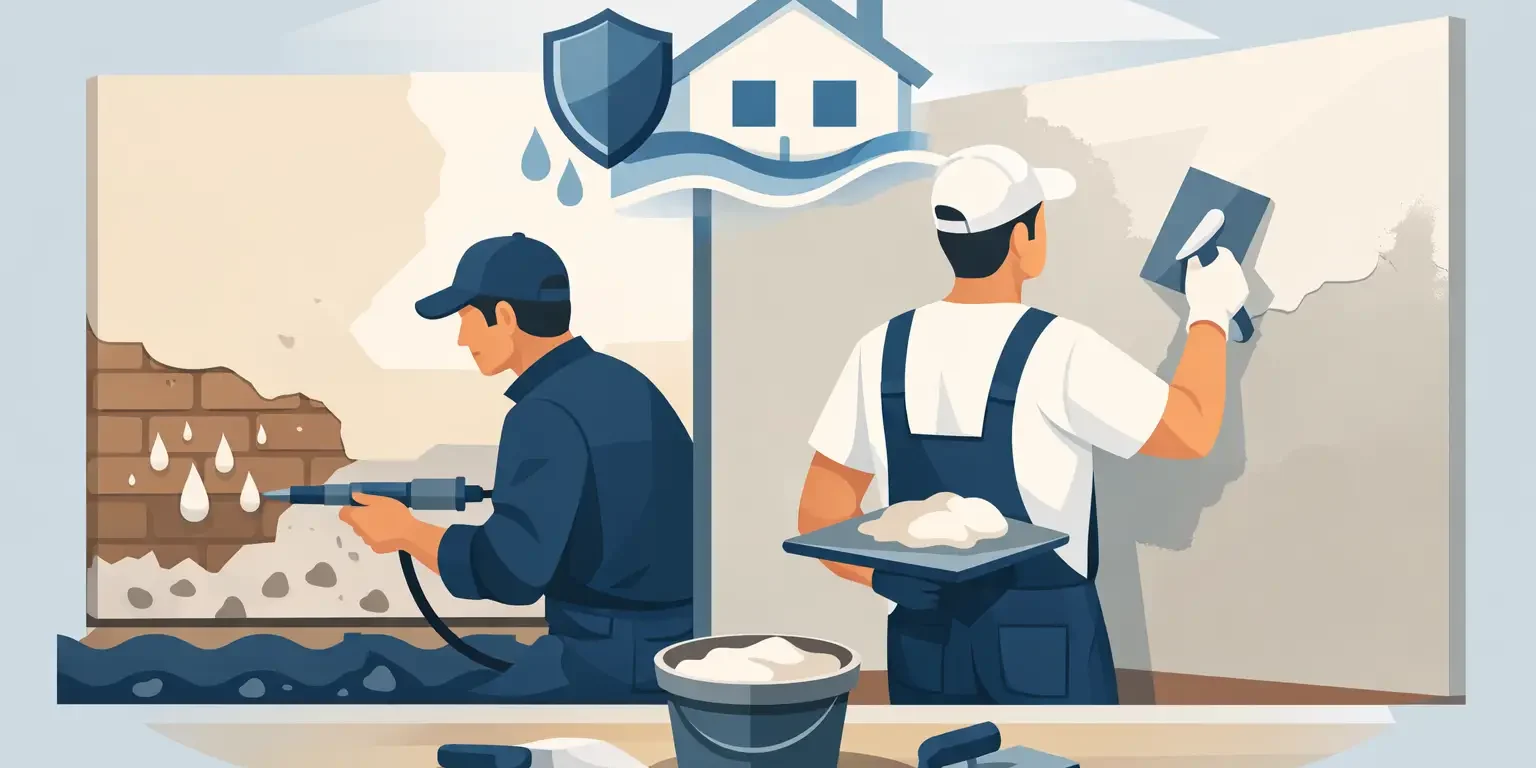
Fresh plaster can look perfect on day one and still fail a few months later if the wall beneath it has not been properly treated or prepared. That is why plastering after damp treatment matters so much. It is not simply a decorating job at the end of the process. It is a key part of making sure the repair performs as it should and the finish lasts.
For many property owners, this is the stage where things become confusing. The damp problem has been identified, the treatment has been carried out, and naturally the next question is when the wall can be made good. The answer depends on the cause of the damp, the condition of the masonry, and the specification used for reinstatement. Getting that right can make the difference between a sound repair and a wall that quickly shows blistering paint, staining or salt contamination again.
Why plastering after damp treatment is not just cosmetic
When a wall has suffered from rising damp, penetrating damp or long-term moisture ingress, the original plaster is often no longer suitable to keep. In many cases it will contain hygroscopic salts. These salts can continue to attract moisture from the air even after the source of damp has been addressed, which means the wall can still look damp when the underlying problem has technically been treated.
That is why proper replastering is often recommended as part of a full remedial specification. The aim is not to hide the old damage. It is to remove contaminated material and replace it with a plaster system that is compatible with the treatment carried out and the condition of the wall.
This is one area where a coordinated contractor has a real advantage. Diagnosis, treatment and reinstatement all affect one another, so it helps when the same team is responsible for the whole sequence rather than separate trades making assumptions.
When should plastering be done?
The timing depends on the type of damp treatment used and the moisture levels within the wall. There is no single answer that suits every property.
After a chemical damp proof course, for example, the wall may be ready for replastering relatively soon, but only if the specified plaster removal has been completed and the substrate is suitable. That does not mean the wall is instantly dry through its full thickness. Drying out can still take time, particularly in older solid wall buildings.
With penetrating damp, the priority is different. The external defect must be resolved first, whether that is defective pointing, cracked render, porous masonry, roof leaks or failed seals around openings. Once the source has been stopped and any damaged plaster removed, reinstatement can go ahead when the wall is stable enough to accept it.
Basements and below-ground areas are another case entirely. If a tanking or membrane system has been installed, the plastering or dry lining specification needs to match that waterproofing system exactly. This is not an area for guesswork.
What needs to happen before replastering?
Good preparation usually starts with removing plaster back to the required height and exposing a clean, sound background. If salts are present, partial patching is often not enough. Contamination can extend beyond the visibly damaged area.
The wall then needs to be assessed for friable mortar, voids, cracking and any residual defects that could affect adhesion. In some cases, additional repairs to masonry are needed before any new plaster is applied. If timber built into the wall has been affected by damp or decay, that may also need attention at this stage.
Just as important is choosing the correct plaster system. Standard gypsum plaster is often the wrong choice on walls that have had damp problems. It can be vulnerable in the presence of residual salts and moisture. A renovating plaster or a sand and cement backing coat with the correct additives may be more appropriate, depending on the specification.
The best plaster systems after damp treatment
There is no universal best option because different wall types and damp issues call for different solutions. What matters is using a system that suits the building and the treatment already carried out.
In many remedial damp situations, a salt-resistant backing coat is used before a finish coat is applied. This creates a barrier between the masonry and the decorative surface. On some projects, a membrane-based system may be specified instead, especially where moisture management is more complex or where salts are particularly persistent.
Older properties need especially careful thought. Many buildings in Devon and Cornwall have solid walls and traditional materials that do not behave like modern cavity construction. In those cases, breathability may be an important consideration, but it still has to be balanced against the need to control salt contamination and achieve a durable finish. This is why a proper survey matters. The right answer depends on the property, not just the symptom.
Common mistakes with plastering after damp treatment
The most common mistake is rushing. Once the visible damp staining has been dealt with, it is tempting to move straight to making the room look presentable again. But if contaminated plaster has not been removed far enough, or if the wrong materials are used, the new finish can fail surprisingly quickly.
Another frequent issue is using general plastering methods on specialist remedial work. A competent plasterer is essential, but damp-related reinstatement also needs an understanding of salts, moisture movement and substrate behaviour. This is not always obvious until problems reappear.
Decoration can also cause trouble. Even when the replastering has been done correctly, painting too soon or using non-breathable finishes may trap moisture and interfere with drying. That can lead to confusion, because the treatment itself may be sound while the decorative finish begins to look poor.
How long does it take to dry?
This is one of the questions clients ask most often, and understandably so. The room may be out of use, decoration is on hold, and there is a strong desire to get back to normal.
Fresh plaster needs time to cure and dry before decorating. Beyond that, the wall itself may continue to dry gradually after treatment, especially in thicker masonry. Factors such as wall thickness, ventilation, heating, season and the original severity of the damp all affect the timescale.
A simple rule of thumb is not enough here. Some walls behave well and dry steadily. Others, particularly in older coastal or exposed properties, can take longer than expected. The important point is that drying is a process, not a single event. A professional contractor should explain what is normal for your property and what signs would suggest a problem.
What homeowners and landlords should expect
A proper remedial plastering specification should be clear about the extent of plaster removal, the materials to be used, and any limitations on decoration afterwards. You should not be left guessing whether the wall has been patched, fully reinstated or treated in a way that supports the damp repair.
You should also expect practical guidance. That may include how long to leave the wall before painting, which finishes to avoid initially, and what level of residual drying is still normal. For landlords and commercial property managers, that clarity is especially helpful when planning room turnaround times or coordinating other trades.
Where a property sale, purchase or insurance claim is involved, having one company handle diagnosis, treatment and reinstatement can reduce delays and crossed wires. It also creates a clearer line of responsibility if questions arise later.
Why workmanship matters as much as treatment
Even the best damp treatment can be undermined by poor reinstatement. Hollow plaster, uneven backgrounds, weak adhesion or incorrect materials can spoil the final result and create doubt about whether the damp problem has really been solved.
That is why experience matters. A specialist team should understand not only how to stop moisture ingress, but also how to reinstate the wall in a way that supports the repair and leaves a finish you can live with. At Sovereign Preservation, that joined-up approach is a major part of what property owners value. It means the technical work and the building work are not treated as separate jobs.
If you are planning plastering after damp treatment, the sensible approach is to treat it as part of the remedy, not the final tidy-up. Ask what plaster will be removed, what system will replace it, how long drying is likely to take, and when decoration can safely start. A well-finished wall is reassuring, but a well-specified wall is what gives you confidence it will stay that way.