A damp patch on an internal wall can set off a lot of worry very quickly, especially if you are buying, selling or trying to protect a rental property. The problem is that rising damp vs condensation is often misunderstood, and the two are regularly confused. They can look similar at first glance, but they behave differently, have different causes and need different treatment.
Getting that distinction right matters. If condensation is mistaken for rising damp, you can end up paying for unnecessary remedial work while the real issue carries on. If genuine rising damp is dismissed as everyday moisture in the air, damage to plaster, decorations and adjoining timber can continue for longer than it should.
Rising damp vs condensation – what is the difference?
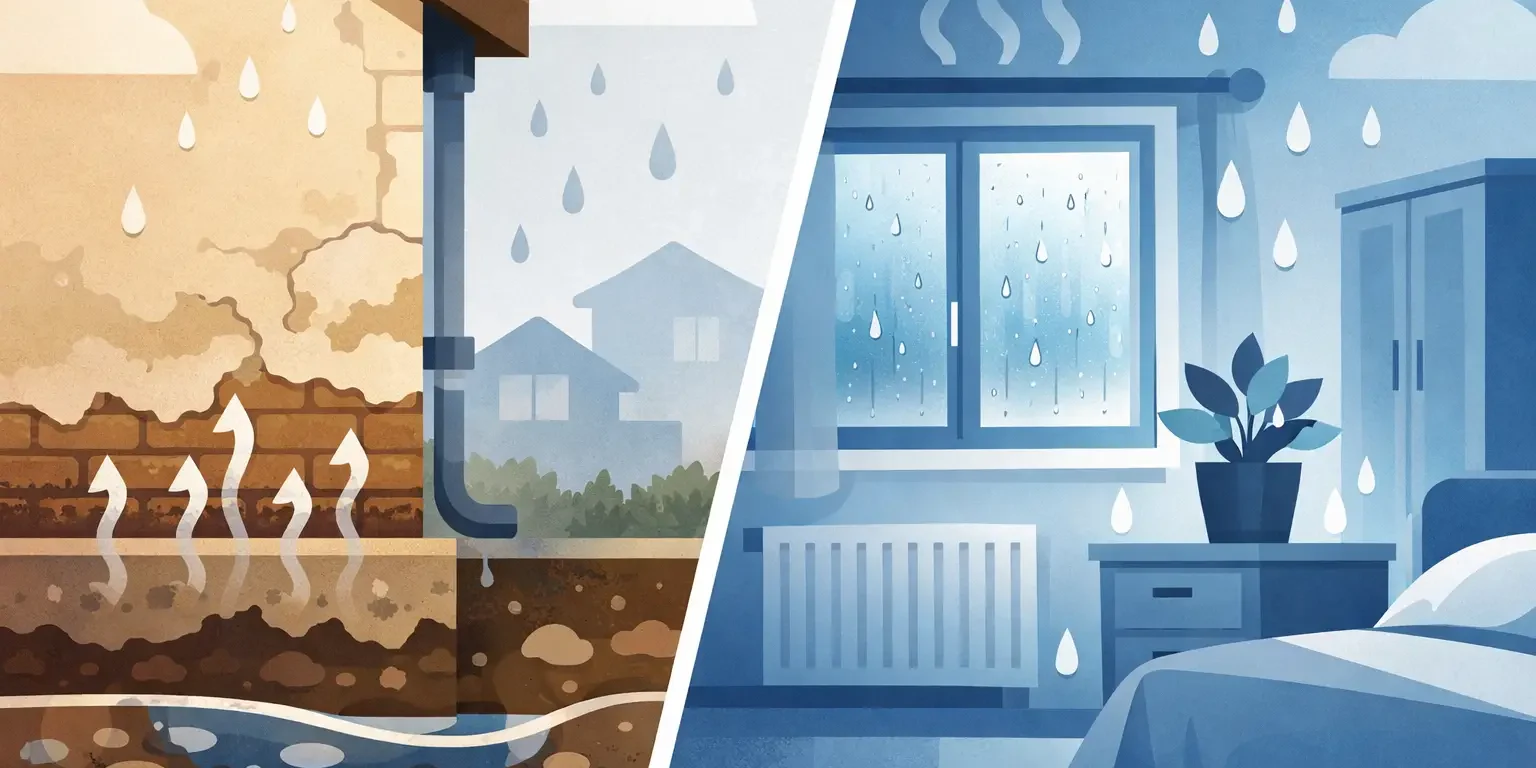
Rising damp is ground moisture travelling up through masonry by capillary action. It normally affects the lower part of walls at ground floor level or below, and it is linked to a failed, bridged or missing damp proof course, or to external ground levels and construction details that allow moisture to bypass protection.
Condensation is different. It happens when warm, moisture-laden air meets a colder surface and turns into water droplets. That moisture may come from everyday living – showers, cooking, drying clothes indoors, poor heating patterns or limited ventilation. In many homes, especially older properties, condensation is the more common issue.
The key point is simple: rising damp comes from the ground, while condensation comes from the air. That sounds straightforward, but in practice there can be overlap. A cold lower wall can attract surface moisture, and an older property may have more than one damp mechanism at work at the same time.
How rising damp usually appears
True rising damp tends to create a fairly recognisable pattern. You are more likely to see signs low down on the wall, often up to around a metre above floor level, though this can vary depending on the wall construction and level of evaporation.
Typical signs include tide marks, salt contamination, blistering paint, damaged skirting boards, decayed plaster and a persistent dampness concentrated at the base of the wall. White, powdery salts may appear on the wall surface or plaster. These are not usually caused by condensation. They are often carried through the masonry by groundwater and left behind as moisture evaporates.
Because rising damp involves moisture moving through the fabric of the building, it can also affect adjacent timbers. Skirtings, embedded timber ends and floor edges may start to deteriorate if the problem has been present for some time.
That said, not every low-level damp patch is rising damp. Leaking pipework, bridged cavities, external defects or internal plaster contamination can all create similar symptoms. This is why proper diagnosis matters more than assumptions.
How condensation usually appears
Condensation often shows up in a different way. It is commonly found on colder surfaces such as windows, external corners, behind furniture, uninsulated walls and in rooms with high humidity like kitchens, bathrooms and bedrooms.
You may notice water droplets on glass, black mould growth, peeling wallpaper, musty smells and patchy staining rather than a neat horizontal tide mark. It is often worse in winter, first thing in the morning or in rooms where air movement is poor.
One of the clearest clues is mould. Condensation frequently leads to surface mould, particularly black spot mould, because moist air settles on cool surfaces and stays there. Rising damp does not usually present in the same way. It is more associated with salts and material breakdown at low level than mould on colder upper corners or around window reveals.
Even so, there are grey areas. If a room is poorly heated and poorly ventilated, lower wall areas can become cold enough to attract condensation. A quick visual check is rarely enough to be certain.
Why misdiagnosis is so common
Damp is one of those terms people use to describe many different problems. A surveyor, landlord, seller and buyer may all be looking at the same stain but describing it in different ways. Some contractors also jump too quickly to one explanation without looking at the building as a whole.
The age of the property matters. The way it is built matters. So do external levels, gutters, drains, render condition, ventilation, occupancy patterns and past alterations. A solid-walled period property in Devon or Cornwall may handle moisture very differently from a newer cavity-wall house.
This is where experience counts. A proper survey should consider not just what is visible on the wall, but why moisture is appearing there, how it is travelling and whether there are multiple contributing factors.
Rising damp vs condensation in older properties
Older buildings often cause the most confusion because they can be more sensitive to changes in heating, ventilation and modern finishes. Cement renders, gypsum plasters and impermeable paints can trap moisture in ways that original lime-based materials would not.
In these homes, condensation may become more noticeable after lifestyle changes such as improved draught-proofing or reduced background heating. At the same time, low-level wall moisture may still point to a genuine damp proofing issue, particularly where ground levels have been raised externally or previous repairs have been poorly carried out.
That is why a one-size-fits-all answer rarely works. The right approach depends on the building, not just the symptom.
How the correct diagnosis is made
A reliable inspection should start with the basics. Where is the damp? How high is it? Is it localised or widespread? Is there mould, are there salts, and what is happening outside the affected wall?
Moisture readings can form part of the picture, but they should not be the whole picture. Meter readings on their own do not prove rising damp. They help identify areas of concern, but they need to be interpreted alongside visual evidence, construction details and the wider condition of the property.
External checks are equally important. High paths, flower beds, damaged pointing, cracked render, blocked air bricks and leaking rainwater goods can all feed moisture into walls or make them slower to dry.
Inside, the survey should consider humidity levels, ventilation, insulation, heating habits and room use. A bedroom with closed trickle vents, drying laundry and furniture pushed tightly against an external wall may have a condensation problem even if the staining looks alarming.
Why the treatment must match the cause
If the issue is condensation, the remedy usually focuses on controlling moisture in the air and improving surface temperatures. That may involve better extractor fans, more consistent heating, improved insulation, changes to occupancy habits or adjustments to ventilation. In some cases, anti-mould treatments and redecoration are also needed once the underlying issue is addressed.
If the issue is rising damp, treatment is more likely to involve correcting the route by which ground moisture is entering the wall. Depending on the building, that can include lowering external ground levels, removing bridging, installing or repairing a damp proof course, replacing contaminated plaster and carrying out associated repairs to timber and finishes.
There is no benefit in treating condensation with a damp proof course if the wall is simply attracting surface moisture. Equally, opening windows will not solve true rising damp if moisture is being drawn up through the structure.
When more than one problem is present
Some properties have both. A wall may suffer from low-level moisture ingress while the room as a whole also has high humidity and poor airflow. In those cases, treating only one side of the problem will not give a complete result.
This is another reason survey-led work is so important. The aim should be to identify the full picture, then recommend a sensible sequence of repairs and reinstatement. That is often more helpful for homeowners and landlords than isolated advice from several different trades.
At Sovereign Preservation, this joined-up approach is often what clients value most. A clear diagnosis, practical remedial work and in-house reinstatement can remove a lot of the uncertainty that comes with damp problems.
What property owners should do next
If you suspect damp, start by noting the pattern. Is it low on the wall, around windows, behind furniture or worst after bathing and cooking? Are skirtings affected, or is there visible mould? Has the issue changed with the seasons?
Those observations are useful, but they are not a substitute for a specialist inspection. Damp problems are best dealt with early, before decorative damage turns into timber decay or a sale is delayed by uncertainty over survey findings.
A proper diagnosis gives you confidence to act on the real cause rather than the most obvious symptom. That is usually the point where a stressful unknown becomes a manageable repair.
If there is one thing worth remembering, it is this: damp rarely improves by itself, but it is far easier to solve when the cause is identified properly from the outset.