You usually hear the phrase after a survey report lands on the kitchen table or a mortgage valuer flags signs of rising damp. At that point, most people are not asking for chemistry lessons – they simply want to know what is damp proof course injection, whether they actually need it, and if it will solve the problem properly.
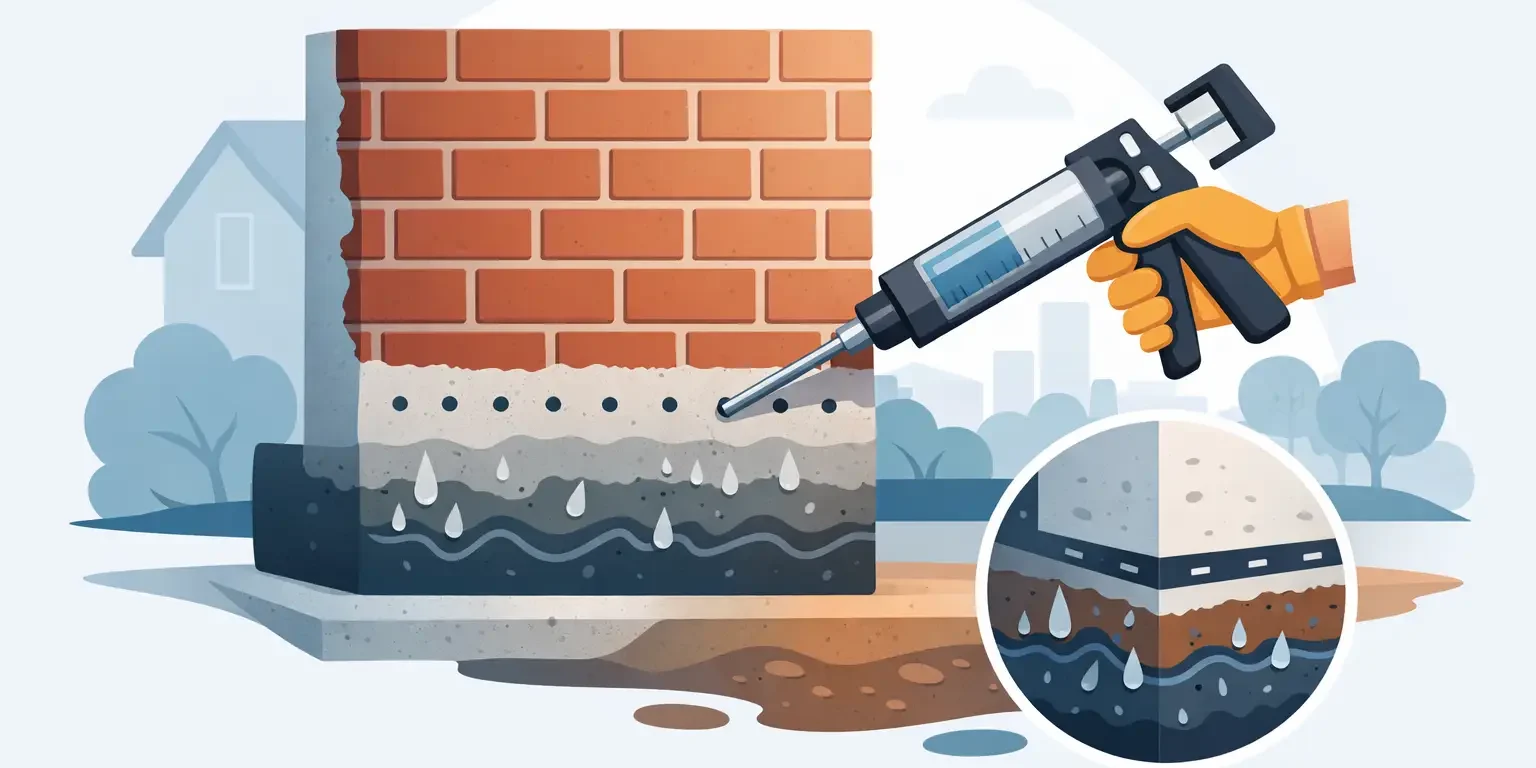
Damp proof course injection is a remedial treatment used to help stop rising damp in masonry walls. In simple terms, a series of holes is drilled into the mortar line, and a specialist damp-proofing cream or fluid is introduced. This material then disperses into the wall and forms a water-repellent barrier, designed to reduce the upward movement of ground moisture through the masonry.
That is the short answer. The more useful answer is that it is not a cure-all for every damp problem, and it only works well when the diagnosis is correct and the installation is carried out properly.
What is damp proof course injection used for?
Damp proof course injection is used where a wall either has no effective damp proof course, or the original one has failed, bridged, or deteriorated over time. Older properties are especially likely to have this issue, although not every old building with damp walls is suffering from rising damp.
Rising damp happens when moisture from the ground travels upward through porous building materials such as brick, stone and mortar. Left untreated, it can lead to salt contamination, damaged plaster, peeling decorations, rotten skirtings and a generally cold, tired feel to the affected rooms.
Injection treatment aims to create a new damp-resisting layer within the wall itself. Once that barrier is in place, the wall should gradually dry out, provided any contaminated plaster is dealt with and there are no other moisture sources still affecting the area.
How damp proof course injection works
The process is fairly straightforward in principle, but success depends on detail. A technician drills a line of evenly spaced holes, usually into a horizontal mortar bed, at the correct level for the replacement damp proof course. A damp-proofing cream or fluid is then injected into those holes.
As the material moves through the capillaries in the masonry, it lines them with a water-repellent compound. This reduces the ability of moisture to track upward from the ground. In effect, the wall keeps its breathability while gaining resistance to liquid water rising through it.
That said, walls are rarely uniform. Rubble-filled walls, random stone construction, very thick walls, chimney breasts and walls with internal voids can all affect how well an injection spreads. This is why one property can be very suitable for injection, while another may need a different method or a more tailored specification.
When injection is the right solution – and when it is not
This is where professional diagnosis matters most. Damp proof course injection is intended for rising damp. It is not designed to fix condensation, leaking pipework, defective render, cracked pointing, high external ground levels, blocked cavities or penetrating damp from driving rain.
In practice, damp problems are often mixed. A ground floor wall may have elevated moisture readings, but the real picture could include bridged damp proofing, poor sub-floor ventilation, external defects and hygroscopic salts from years of contamination. If injection is used without dealing with those surrounding issues, the result may disappoint.
A good survey should therefore ask a broader set of questions. Is the original damp proof course visible? Has it been bridged by raised paths, flower beds or internal screeds? Are there signs of penetrating damp higher up the wall? Is there salt damage typical of rising damp? What is the construction of the wall? Has cement render trapped moisture where a more suitable finish is needed?
The answer is not always injection, and a dependable contractor should say so when that is the case.
What happens during a damp proof course injection job?
Most homeowners want to know what the work actually involves. After confirmation that injection is appropriate, the affected wall areas are prepared. In many cases, damaged or salt-contaminated plaster has to be removed to a suitable height, because even after the moisture source is controlled, residual salts can continue to attract atmospheric moisture and spoil decorations.
The injection itself is usually relatively quick. The more disruptive part is often the associated reinstatement work. Once the new damp proof course has been installed, replastering with the correct specification is commonly required. This is important because standard gypsum plaster applied onto contaminated masonry can fail prematurely.
Drying time also matters. Walls do not become bone dry overnight. They need time to release retained moisture, and the exact period depends on wall thickness, construction, previous saturation and room conditions.
For that reason, it is sensible to view damp proof course injection as part of a remedial system rather than a single isolated product.
What are the benefits of damp proof course injection?
When specified correctly, damp proof course injection is a practical and proven way to deal with rising damp in many masonry buildings. It is less invasive than physically cutting in a completely new damp proof course, and it can often be installed efficiently with limited structural disturbance.
It can also fit well within occupied homes and commercial properties where a workable, controlled remedial approach is needed. For landlords, buyers and sellers, it often provides a clear treatment route following a survey. For homeowners, it can help protect decorations, skirting boards and internal finishes from further deterioration.
The main benefit, though, is confidence in the diagnosis and in the workmanship around it. The treatment is only as good as the survey, the specification and the reinstatement that follows.
Are there any limitations?
Yes, and it is better to be clear about them.
Injection is not magic, and anyone presenting it as a one-size-fits-all answer is oversimplifying the problem. Some walls are harder to treat effectively because of their construction. In very old or irregular stone walls, for example, moisture pathways can be unpredictable. In those cases, other systems or additional measures may be more appropriate.
It is also worth remembering that many walls thought to have rising damp are actually suffering from something else, or from several issues at once. A room with black mould, poor ventilation and cold surfaces may need condensation control, not damp proof course injection. Equally, a wall with a leaking gutter outside will not be cured by injecting the mortar joint inside.
There is also the matter of aftercare. If external levels remain too high or internal plaster is reinstated incorrectly, the performance of the treatment can be compromised. Good damp proofing is rarely just about one product.
What is damp proof course injection in older properties?
Older buildings need especially careful assessment. Many period homes in Devon and Cornwall have solid walls, traditional materials and a long history of repairs carried out to different standards over the years. That can make damp diagnosis more complex.
In some older properties, damp proof course injection is entirely appropriate. In others, the building may need a more sympathetic combination of repairs, such as lowering external ground levels, improving drainage, removing inappropriate cement finishes, and using breathable materials where suitable.
This does not mean older homes cannot be treated successfully. It means they should not be approached with assumptions. The best results come from understanding how the building was constructed, how moisture is entering or moving through it, and what remedial work will genuinely address the cause.
How do you know if you need it?
Visible signs such as tide marks, blistered paint, deteriorating skirtings and salt deposits near the base of walls can all point towards rising damp, but they are not proof on their own. Similar symptoms can appear for different reasons.
The sensible next step is a proper damp survey by an experienced specialist. That should include inspection of the building fabric, moisture profiling, consideration of external defects and a clear explanation in plain English of what is happening and why. If injection is recommended, you should also be told what associated works are needed, what level of disruption to expect, and how reinstatement will be handled.
This is where working with a company that can both diagnose and carry out the remedial building work has real value. It reduces the risk of gaps between survey findings, treatment and final finishing, and it gives you one point of accountability from start to finish.
For most property owners, the real question is not just what is damp proof course injection, but whether it is the right solution for their wall. That answer should come from evidence, not guesswork. If the diagnosis is right, the treatment can be very effective. If the diagnosis is wrong, even the best product will not fix the problem.
A damp issue rarely becomes cheaper or simpler by being left alone, so if you are seeing signs at low level walls, getting clear advice early is often the most practical place to start.