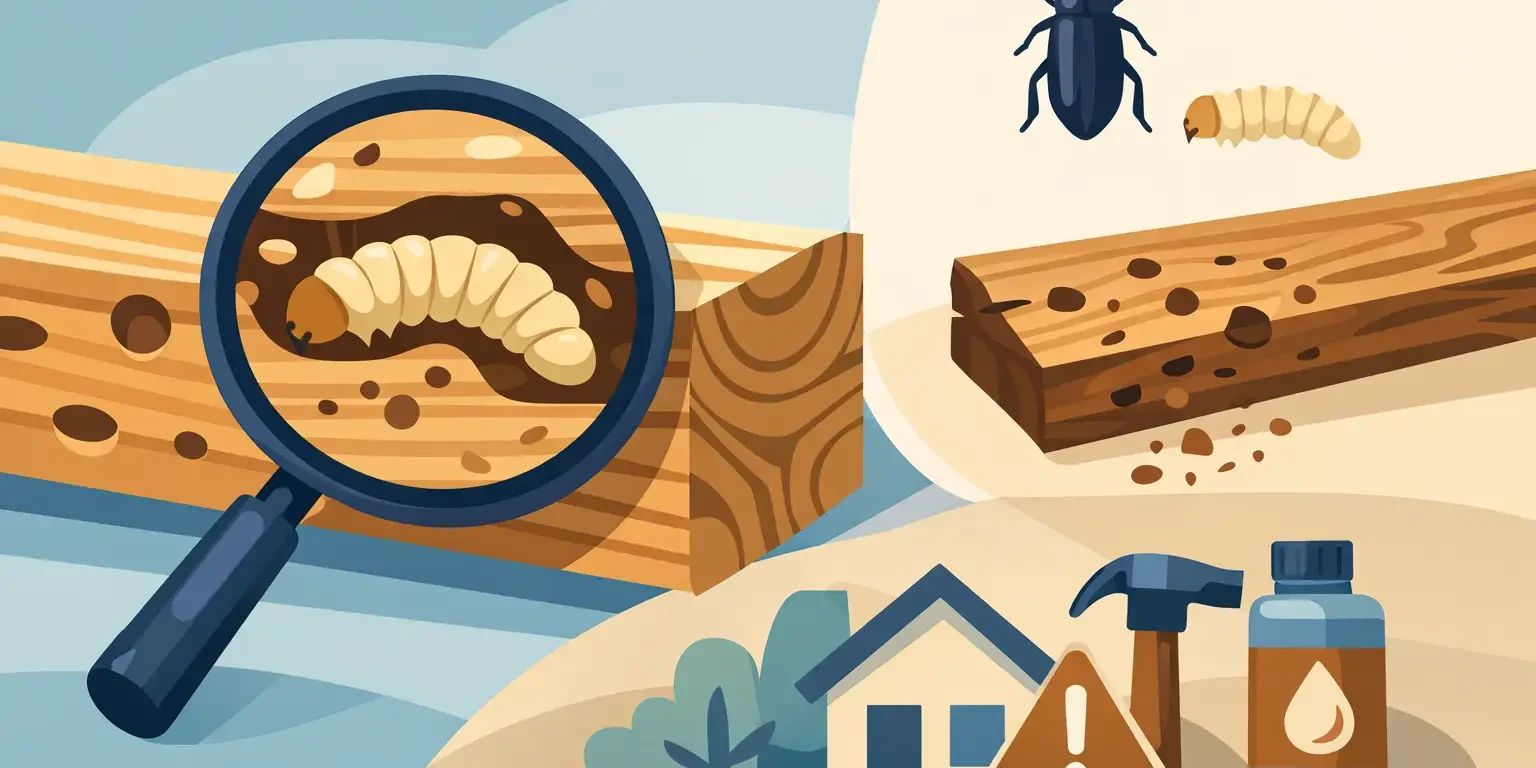
A few neat round holes in a skirting board or loft timber can look minor. In some cases, they are minor. In others, they are the visible sign of a longer-running timber problem that needs proper attention. That is why woodworm should never be judged on appearance alone.
For homeowners, landlords and buyers, the real question is not simply whether beetles have been present. It is whether the infestation is active, how far it has spread, what condition the timber is in, and whether moisture is helping the problem continue. Getting that diagnosis right matters far more than reaching for a spray from the local DIY shop.
What woodworm actually is
Woodworm is the common term used for the larvae of wood-boring beetles. The adult beetle lays eggs on or near timber, the larvae hatch and feed within the wood, and later emerge through small flight holes. Those holes are often the first thing people notice, but they appear at the end of the cycle rather than the start.
Several beetle species can affect buildings in the UK, and they do not all behave in the same way. Common furniture beetle is the one most people mean when they say woodworm, but there are other species linked with different timber types and moisture conditions. That is one reason a proper survey is useful. Correct identification helps determine whether treatment is needed, how urgent the issue is, and whether other defects are contributing.
Signs of woodworm in a property
The classic sign is a cluster of small, round exit holes in timber. You may also see very fine bore dust, sometimes called frass, beneath affected wood or around the holes. In more advanced cases, timber can feel weak, crumbly or locally broken away at the surface.
Woodworm can show up in roof timbers, floor joists, floorboards, skirting boards, staircases, door frames and built-in joinery. It is also common in older furniture, although furniture infestation is not always the same problem as a structural timber infestation within the building itself.
Not every hole means active infestation. Old flight holes can remain for decades after beetles have gone. Timber staining, dirt and decoration can also make surface marks look worse than they are. That is where experience counts. A surveyor will look at the age and pattern of the holes, any fresh frass, the timber species, and the surrounding moisture conditions before advising on next steps.
Active or historic infestation?
This is the point that causes most confusion. If woodworm has been active in the past, you may still see plenty of evidence even though there is no current beetle activity. Treating historic infestation without checking the wider condition of the timber can lead to unnecessary work.
On the other hand, assuming it is old when activity is still ongoing can allow further damage to develop. Fresh frass, recent emergence holes and suitable damp conditions may all suggest current activity, but the answer is not always obvious from a quick glance. A proper inspection gives you a clearer basis for action.
Why woodworm happens
Wood-boring beetles are more likely to affect timber that is damp or has been damp for a sustained period. That does not mean every case of woodworm is caused by a major leak, but moisture often plays a part. Poor ventilation in roof spaces and sub-floor voids, plumbing defects, penetrating damp and condensation can all create conditions that make timber more vulnerable.
This is why timber infestation should not be treated as an isolated issue. If the source of excess moisture is left unresolved, the environment that allowed the infestation to thrive may remain in place. In some properties, the right solution involves both timber treatment and repairs to improve ventilation, deal with damp ingress or replace decayed sections.
How serious is woodworm?
It depends on three things – the beetle species involved, the extent of the infestation and the structural role of the timber affected.
A light, localised infestation in a non-structural piece of joinery is very different from widespread activity in floor joists or roof timbers. Older properties can also have a mix of historic and more recent defects, which makes blanket assumptions risky.
In many cases, woodworm is treatable and manageable once the cause has been identified. Even where timber has been weakened, selective repair or replacement may be enough. The key is not to guess. Structural timbers deserve a careful assessment so you know whether the issue is cosmetic, localised or something that needs prompt remedial work.
Woodworm treatment – what actually works?
Treatment should match the findings of the survey. If infestation is active and the timber is suitable for preservation, a professional insecticidal treatment may be recommended. This is usually applied to affected accessible timbers after preparation, with the aim of dealing with the larvae within the wood.
However, treatment on its own is not always the whole answer. If timber is heavily damaged, localised repairs or replacement may be required. If dampness is present, that should be addressed alongside the infestation. If the evidence points to historic rather than active woodworm, treatment may not be needed at all.
That balanced approach is important. Over-treating can be wasteful, while under-treating can leave the underlying problem unresolved. A reputable specialist should explain what has been found, whether the infestation is current, what remedial works are necessary, and what can be left alone.
Can you treat woodworm yourself?
Surface products sold for DIY use can have a place for minor, non-structural items, but they are not a substitute for diagnosis in a building. The difficulty is not only applying a product. It is knowing whether woodworm is active, whether the species has been identified correctly, whether hidden structural timbers are affected and whether moisture conditions are driving the problem.
For a piece of furniture in a shed, a DIY approach may be enough. For suspended timber floors, loft structures or survey issues arising during a sale or purchase, professional advice is usually the safer route.
When to arrange a timber survey
If you are buying or selling a property and woodworm has been flagged in a report, it is sensible to get a specialist timber survey. The same applies if floors feel springy, loft timbers look heavily affected, or you have seen fresh frass or new holes appearing.
Landlords and property managers also benefit from early inspection, particularly where there are older buildings, ongoing moisture issues or tenant reports of damaged floorboards and joinery. A clear report helps with maintenance planning and can be useful where insurers, estate agents or mortgage lenders need evidence of condition and remedial recommendations.
In Devon and Cornwall, where older housing stock and coastal moisture exposure can be a factor in some properties, it makes particular sense to look at the building as a whole rather than focusing on the holes alone.
What to expect from professional advice
A good specialist will not simply arrive, say “woodworm”, and recommend a standard treatment. They should inspect the affected areas, assess the timber condition, consider moisture sources and distinguish between active and historic infestation wherever possible.
You should also expect a clear explanation in plain English. That includes what was found, why it matters, whether treatment is required, and whether any associated building works are needed. In some cases, preserving the existing timber is the right route. In others, sections may need repair or replacement. It depends on condition, access and the role of the timber in the structure.
Where remedial work is needed, many property owners understandably prefer one contractor who can survey, treat and carry out reinstatement works rather than passing the job between separate firms. That joined-up approach often saves time and reduces confusion.
Avoiding future woodworm problems
Prevention usually comes back to timber condition and moisture control. Keeping roofs, gutters and external walls in good order helps prevent water ingress. Good sub-floor and roof ventilation reduces stagnant damp air. Plumbing defects should be dealt with promptly, and any signs of rot or condensation should be investigated before they affect surrounding timber.
It is also worth being cautious about stored timber and old furniture brought into outbuildings or loft spaces. Not every item presents a risk, but where there is obvious infestation, it is sensible to inspect before placing it near sound timber.
If you are looking at suspicious holes in a beam, floorboard or roof timber, the best next step is not to panic and not to ignore it. Woodworm is common, but each case needs to be judged on its own facts. A careful survey gives you clarity, and clarity is what helps you protect the property properly.