A basement does not have to be visibly flooded to have a water problem. In many properties, the warning signs are more subtle – peeling paint, salt deposits on walls, a persistent musty smell, or finishes that never seem to stay sound for long. When people start researching the best basement waterproofing systems, they are usually trying to answer a more practical question: what will actually work in this building, and keep working?
That matters because basement waterproofing is not a one-size-fits-all job. The right system depends on how water is entering, the condition of the structure, how the space will be used, and whether the aim is simple storage or a fully habitable room. A good specification deals with water pressure properly. It should not just hide damp for a few months and leave you facing repair bills later.
What makes the best basement waterproofing systems?
The best basement waterproofing systems are the ones designed around the property, not the ones promoted as a universal fix. Below-ground structures behave differently from ordinary walls above ground level. They are often subject to lateral damp penetration and hydrostatic pressure, which means moisture can move through floors and walls even when there is no obvious leak.
A proper waterproofing design starts with diagnosis. Is the basement suffering from occasional seepage after heavy rain, or is there consistent water pressure against retaining walls? Is the masonry sound enough for a direct barrier system, or is a drained approach safer? Are there signs of movement, old repairs, bridging, or failed finishes that could affect performance? These details matter far more than brand names or quick online comparisons.
In practice, most basement systems fall into two main categories: barrier protection and drained protection. In some cases, a combined approach is the best answer.
Cementitious tanking systems
Cementitious tanking is one of the most widely recognised basement waterproofing methods. It involves applying a waterproof slurry or coating directly to prepared masonry or concrete, creating a barrier that resists moisture passing through the structure.
This can be a very effective solution where the substrate is sound, preparation is thorough, and the system is correctly detailed. It is often used in cellars, semi-basements, and lower-ground areas where space is limited and clients want to maximise room dimensions. Because the waterproofing is applied directly to the surface, it does not require an internal cavity gap in the same way as a membrane system.
The trade-off is that tanking relies heavily on the condition of the background and the quality of preparation. Weak masonry, contamination, cracking, movement, or poor junction detailing can all undermine performance. Tanking also tends to be less forgiving if the building shifts slightly over time. It can work very well, but only when specified and installed with care.
Cavity drain membrane systems
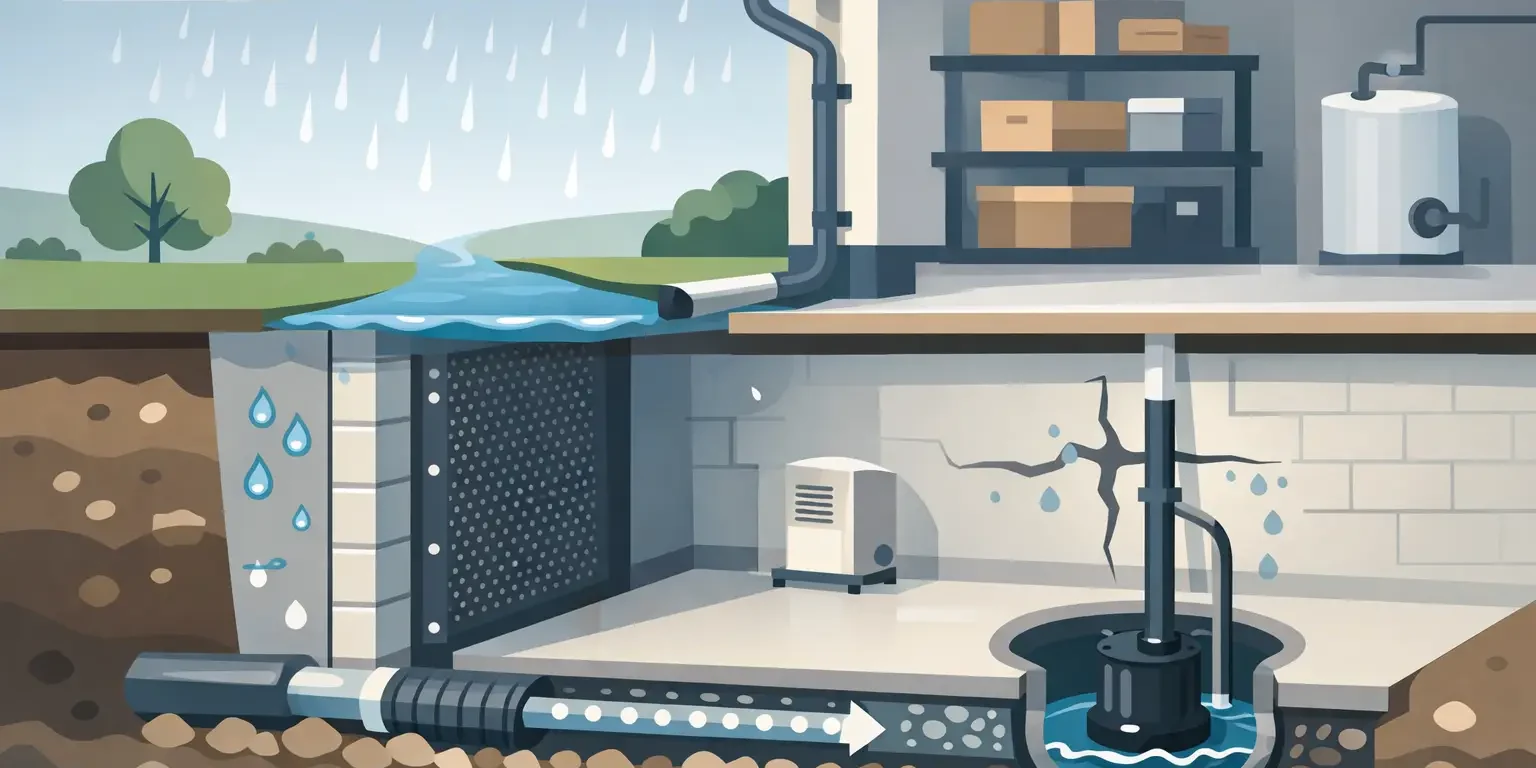
If you ask many basement specialists what they consider among the best basement waterproofing systems for long-term reliability, cavity drain membranes will be high on the list. Rather than trying to block water at the wall face, this type of system manages it. Studded membranes are fixed to walls and sometimes floors, creating a controlled cavity that allows moisture to travel behind the internal lining and drain away safely.
That water is then directed to perimeter drainage channels and, where required, collected in a sump chamber and removed by a pump. The key idea is simple: instead of fighting every drop of moisture at the structure itself, the system accepts that water may enter and manages it in a controlled way.
This approach is often well suited to older properties, mixed construction, and basements where substrate conditions are less predictable. It is also commonly preferred for habitable conversions because it can offer a more maintainable solution. If any future issue arises, the system is generally easier to inspect and service than a fully buried barrier finish.
The main consideration is that membrane systems are not just about the membrane. They depend on correct drainage design, proper installation, access for maintenance where needed, and reliable pump arrangements if gravity drainage is not available. A badly designed drainage path can be just as problematic as no system at all.
Which system is better – tanking or membrane?
This is the question most property owners ask, and the honest answer is that it depends on the building.
Tanking can be a strong option where the structure is stable, the wall surfaces are suitable, and the intended use is relatively straightforward. It can also be useful where preserving internal space is a priority. Membrane systems are often the safer choice where there is higher water risk, variable substrate condition, or a need for a more adaptable and maintainable internal waterproofing arrangement.
For many basement conversions, cavity drain systems are preferred because they work with the reality of moisture rather than assuming it can always be held back indefinitely. That does not make tanking outdated or inferior. It simply means each approach has strengths and limits.
A specialist survey should decide the system, not guesswork.
Other parts of a basement waterproofing system
People sometimes focus only on the wall treatment, but effective waterproofing usually depends on several linked elements. Floor waterproofing may be required as well as wall protection. Wall-floor junctions need careful detailing. Service penetrations, steps, internal partitions, and external ground levels can all affect the result.
Drainage is especially important. If groundwater has nowhere sensible to go, pressure builds up and failure becomes more likely. In some basements, perimeter drainage and a sump pump are central to the whole design. In others, external defects such as broken rainwater goods, high ground levels, poor falls, or defective pointing also need attention. Waterproofing should not be expected to compensate for every building defect around it.
This is one reason a survey-led approach matters. The best result usually comes from treating the basement as part of the wider building, not as an isolated problem.
How to choose the best basement waterproofing systems for your property
Start with the use of the space. A storage cellar has different tolerances from a home office, bedroom, treatment room, or rental unit. The drier and more finished the room needs to be, the more important it is to choose a properly designed waterproofing system rather than a basic coating or decorative treatment.
Next, consider the age and construction of the building. Older properties in areas such as Devon and Cornwall often have solid walls, variable stonework, and a history of alterations. Those conditions can make off-the-shelf advice unreliable. What works in a modern concrete basement may not be the right answer for a period property with mixed materials and previous damp repairs.
It is also worth thinking about aftercare. Some systems need routine maintenance, particularly where pumps and drainage channels are involved. That is not a reason to avoid them. It is simply part of owning a below-ground waterproofed space. A good contractor should explain this clearly so there are no surprises later.
Common mistakes when comparing systems
The biggest mistake is choosing on price alone. Basement waterproofing is one of those areas where the cheapest quote can become the most expensive outcome if the diagnosis is poor or the specification is incomplete.
Another common problem is confusing waterproof paint or surface sealers with a full basement waterproofing system. Decorative coatings may improve appearance for a short time, but they are not the same as a designed below-ground waterproofing solution.
It is also easy to underestimate the importance of reinstatement works. Once waterproofing is complete, walls, floors, joinery, plaster finishes, and room fit-out all need to be compatible with the system. That is why many clients prefer working with one contractor that can manage diagnosis, treatment, and reinstatement together. It reduces the risk of mixed responsibilities and conflicting advice.
What to expect from a proper waterproofing survey
A worthwhile survey should look beyond the obvious damp patches. It should assess the construction, identify likely moisture routes, consider external influences, and recommend a system that suits the intended use of the basement. Where appropriate, it should also explain why one method has been chosen over another.
You should expect clear advice in plain English, not a sales pitch disguised as a report. If pumps, drainage, preparation work, or associated building repairs are needed, those points should be set out clearly. The aim is confidence that the recommendation addresses the cause and the risk, rather than simply covering over symptoms.
At Sovereign Preservation, this is exactly why specialist survey work sits at the centre of the process. Basement waterproofing is not just about applying a product. It is about understanding the building first and then carrying out the right remedial and reinstatement work properly.
If you are weighing up the best basement waterproofing systems, the most useful next step is not to start with the product brochure. Start with an experienced inspection. The right system should fit the building, the water risk, and the way you plan to use the space for years to come.