A cellar that smells musty after heavy rain is usually where the real question starts. When clients ask us about tanking slurry vs membrane, they are rarely comparing products in theory. They want to know which system will keep water out, protect the building fabric and avoid paying twice for the wrong solution.
The honest answer is that both systems can work very well, but they do different jobs in different ways. The right choice depends on the condition of the structure, the amount of moisture or water pressure, how the space will be used, and whether you need a barrier system or a managed drainage system. That is why a proper survey matters more than a quick product recommendation.
Tanking slurry vs membrane – the core difference
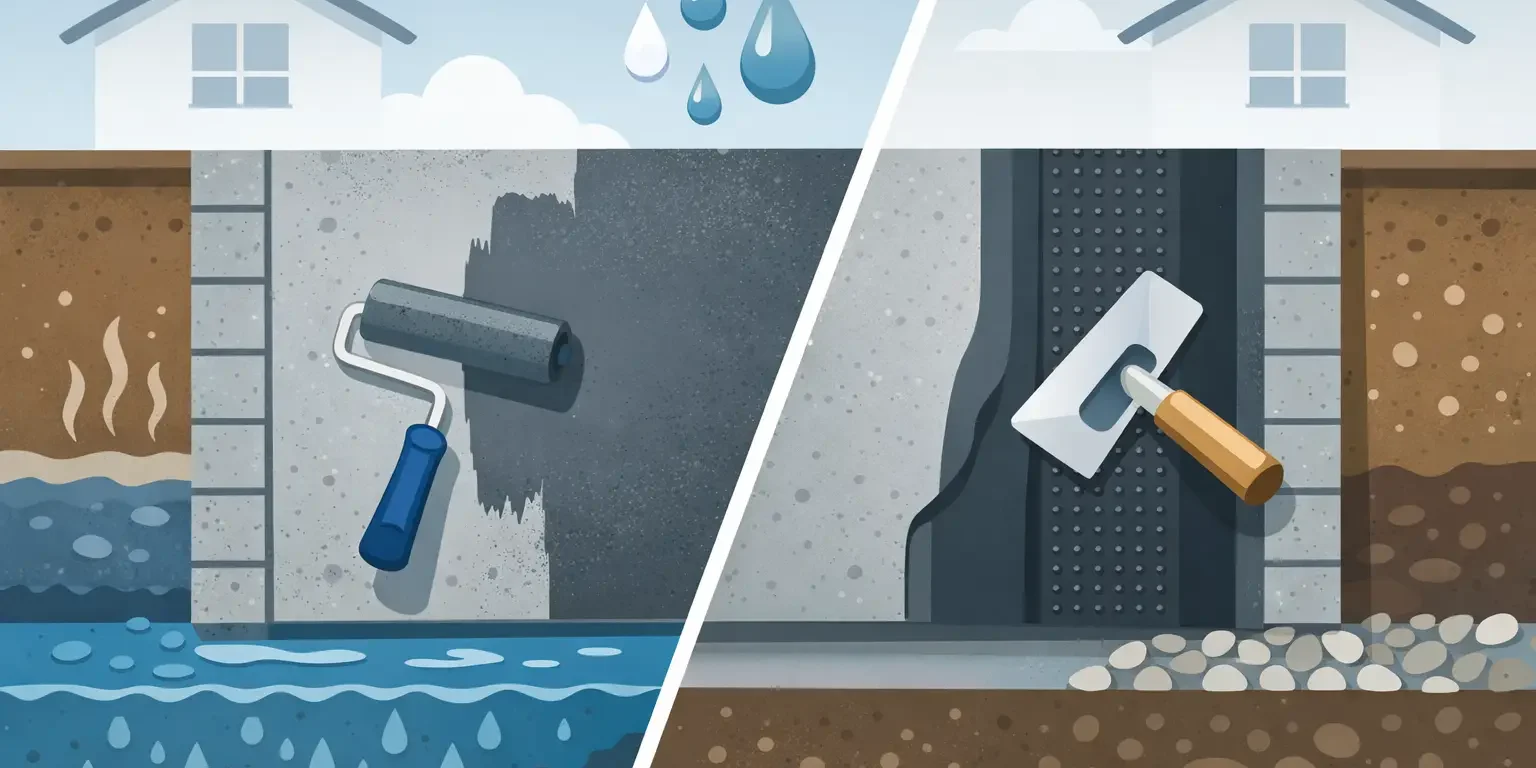
Tanking slurry is a cement-based waterproof coating applied directly to masonry or concrete. Once cured, it forms a barrier intended to resist moisture passing through the wall or floor surface. In simple terms, it tries to hold water back at the point it enters the structure.
A cavity drain membrane works differently. Rather than attempting to stop all water at the wall face, it allows moisture to enter behind a studded membrane and then controls it, usually by directing it to a drainage channel and sump pump or a suitable outlet. It is a water management system rather than a direct barrier.
That difference matters. Tanking slurry relies heavily on the substrate being sound, properly prepared and able to resist water pressure without movement or failure. A membrane system is generally more forgiving where walls are uneven, mixed in construction or subject to ongoing moisture ingress.
Where tanking slurry tends to work best
Tanking slurry can be very effective in the right setting. It is often suited to solid masonry or concrete structures where the background is stable, the preparation can be carried out thoroughly and the level of water pressure is manageable. It can also be useful where space is tight and you want a system with minimal build-up on the internal face.
In some basements and retaining walls, slurry provides a practical and cost-effective answer. If the wall surface can be stripped back to a clean, sound substrate and repaired properly beforehand, a barrier coating may perform well for many years.
However, success depends on detail. Junctions between walls and floors, service penetrations, cracks, old renders and contaminated backgrounds can all affect performance. If water pressure is significant, even a small weak point can become a route for failure.
Where membrane systems tend to work best
Membrane systems are commonly chosen for basements, cellars and below-ground rooms where there is a higher risk of ongoing water ingress or where the space is being converted into habitable accommodation. They are especially useful when the wall background is variable or when trying to achieve a more reliable result in older properties.
Because the membrane is not relying on perfect adhesion to every part of the masonry, it can offer a more dependable approach in buildings with age-related movement, uneven stonework or salts and moisture already present in the structure. Instead of fighting every drop of water at the wall face, the system accepts that some moisture may be there and manages it safely.
That said, membranes are not simply fixed to the wall and forgotten. They usually form part of a wider waterproofing design, often including perimeter drainage, inspection points, and in many cases a sump and pump. If that drainage element is poorly designed or not maintained, the system can be compromised.
The trade-offs homeowners should understand
There is no point pretending one system is always better. Each has strengths and limitations, and good advice should make those clear.
Tanking slurry is often less complex in principle, and in some cases the installation cost may be lower than a full cavity drain setup. It can be a sensible choice for certain structures, plant rooms, storage areas or smaller spaces where conditions are favourable. The downside is that it can be less tolerant of structural movement, poor preparation or persistent external water pressure.
Membrane systems tend to offer more resilience in difficult below-ground conditions, particularly in older properties. They are widely used where a dry internal environment is required for regular use. The trade-off is that they usually involve more components, and if pumps are included there is an element of ongoing servicing and maintenance.
This is where intended use becomes critical. A basic storage cellar has different waterproofing demands from a home office, guest room or commercial space. The drier and more reliable the finish needs to be, the more careful the system selection needs to be from the start.
Tanking slurry vs membrane for older properties
Many buildings across Devon and Cornwall are not straightforward modern concrete boxes. They may have stone walls, mixed materials, previous repairs, uneven substrates and decades of moisture movement through the structure. In these cases, tanking slurry vs membrane is not just a product comparison. It is a building-specific decision.
Older properties often suit membrane systems because they cope better with irregular backgrounds and the realities of moisture in traditional construction. That does not mean slurry has no place. It means the property has to be assessed properly rather than treated with a one-size-fits-all approach.
We often find that problems arise when a barrier system has been applied over unsuitable backgrounds, failed plaster, salts or damaged masonry without dealing with the root condition first. Waterproofing is only as good as the preparation, the detailing and the diagnosis behind it.
What about cost?
Cost matters, but looking only at the initial figure can be misleading. A cheaper system that is poorly suited to the building may become the more expensive option once removal, reinstatement and further repairs are taken into account.
Tanking slurry may appear the lower-cost route in simple installations because the material system is relatively direct. Membrane systems can cost more upfront due to drainage components, pumps, battery backups in some cases, and internal finishes built around the system.
But the real value comes from suitability and durability. If a membrane is the safer option for a wet basement with ongoing lateral penetration, it may save considerable disruption later. Equally, if slurry is genuinely appropriate for a sound, stable structure, there is no advantage in overcomplicating the job.
Why surveys matter more than product names
Property owners are often presented with confident opinions after a brief look at a damp wall. That is rarely enough. Below-ground waterproofing should be based on the structure, the source of moisture, the level of risk and the intended use of the area.
A proper inspection should consider the wall construction, floor junctions, external ground levels, signs of movement, existing coatings, ventilation, drainage options and whether the space needs to meet a particular standard of dryness. This is also where associated defects such as rotten timbers, damaged plaster or salt contamination may need to be addressed as part of the wider remedial works.
For many clients, the advantage of using a specialist contractor is not simply that they install waterproofing. It is that they can diagnose the cause, recommend the right system and carry out the reinstatement in a coordinated way, rather than leaving you to organise separate trades.
Which system is right for your property?
If the structure is sound, the background can be prepared properly, water pressure is limited and the area does not require a fully managed cavity system, tanking slurry may be entirely suitable. It has been used successfully for many years and remains a valid option where conditions fit.
If the property is older, the wall construction is irregular, the basement is visibly wet, or the space is intended for regular occupation, a membrane system is often the more reliable route. It is particularly useful where controlling and directing water is more realistic than trying to block it completely at the wall face.
Sometimes the right answer is neither a simple slurry-only approach nor a standard membrane package without thought. Some projects need combined measures, drainage improvements or structural repairs before waterproofing is applied. That is why experience matters.
Sovereign Preservation has worked with homeowners, landlords and property professionals for many years on this exact kind of decision. The best outcomes usually come from taking a measured view of the building rather than forcing the building to fit a preferred product.
If you are weighing up tanking slurry vs membrane, the safest starting point is not choosing a material from an online description. It is understanding what your property is doing with water, and what it will need to keep doing for years after the work is finished.