A wet patch at the base of a basement wall is rarely just a cosmetic issue. Water can damage finishes, create musty odours, encourage mould growth and, where timber is present, contribute to decay. The reliable way to how to stop basement leaks is not to cover the affected area with a waterproof coating and hope for the best. It is to establish where the water is coming from, how it is travelling through the building and which waterproofing approach suits the space.
Basements are below ground level, so they are exposed to moisture in a way that the rest of a property is not. In Devon and Cornwall, older solid-wall properties, changes in ground levels, heavy rainfall and coastal weather can all make water management more demanding. A proper diagnosis prevents money being spent on a treatment that only disguises the symptoms.
Start by identifying the source of water
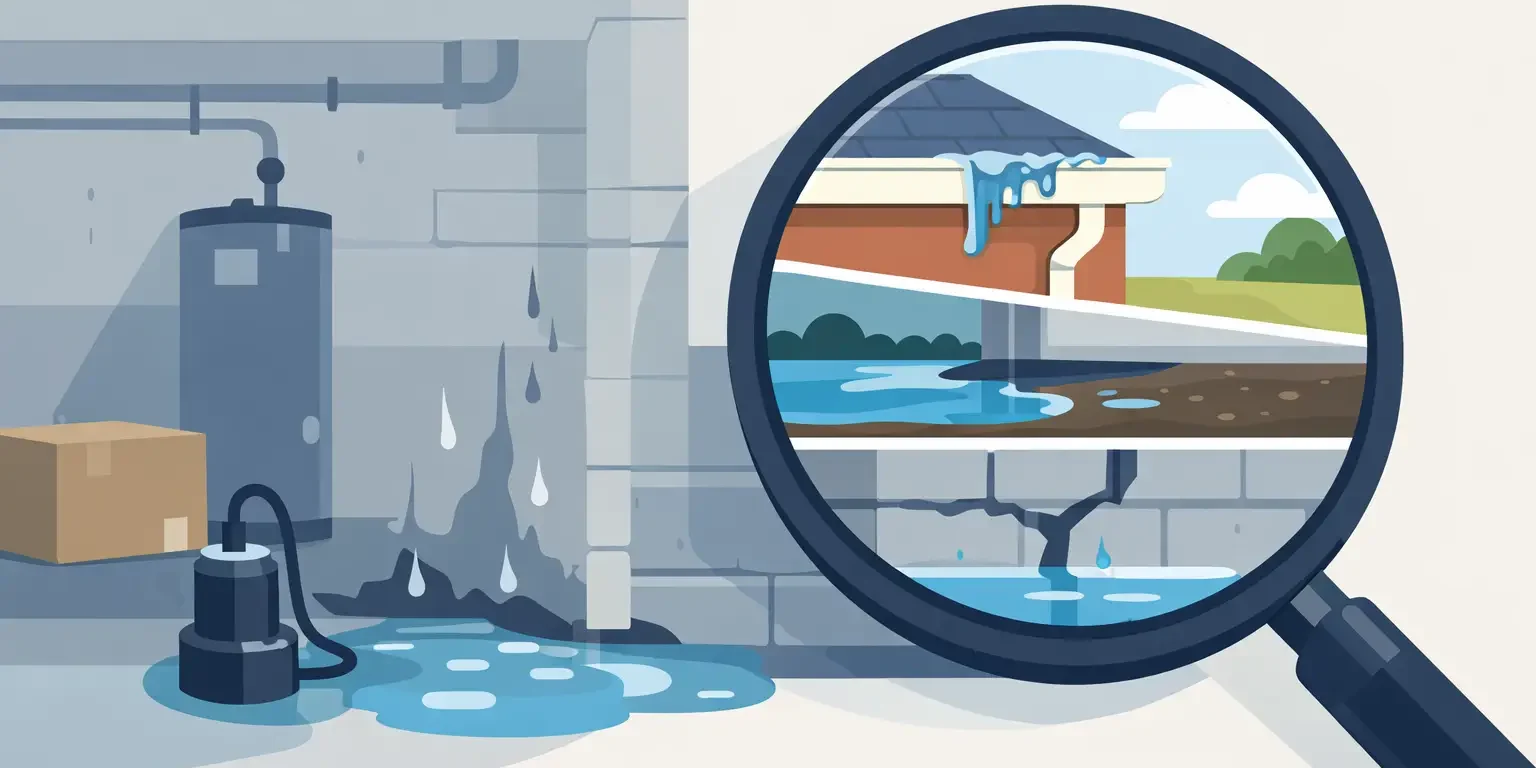
The location of dampness offers useful clues, but it does not provide the whole answer. A leak that appears after prolonged rain may be linked to overflowing gutters, defective downpipes, poor external drainage or water collecting against the wall. Damp that becomes worse in winter may be condensation, particularly in a poorly ventilated storage basement. Water entering at one precise point could indicate a crack, failed joint, pipe leak or defect around a service entry.
Look for the timing as well as the visible signs. Note whether the problem develops after rain, when a washing machine or bathroom is used, or during periods of high groundwater. Check whether the damp is limited to one wall, concentrated around the floor-wall junction, or spread across several surfaces. White, powdery deposits can show that moisture is passing through masonry and leaving salts behind as it evaporates.
It is also worth checking outside before assuming the basement itself is at fault. Blocked gullies, bridged air bricks, cracked render, raised flower beds and hard landscaping that slopes towards the building can all direct water where it should not go. A downpipe discharging at the foot of the wall may be enough to overwhelm a vulnerable area during heavy rain.
Do not confuse condensation with a water ingress problem
Condensation usually forms when warm, humid air meets cold basement surfaces. It may show as surface droplets, mould on stored belongings or dampness behind furniture. Improving extraction, ventilation and heating patterns can make a considerable difference.
However, ventilation will not stop water under pressure entering through walls or floors. Equally, a waterproofing system cannot resolve a leaking pipe. Several moisture sources can exist at once, which is why an experienced survey is particularly valuable where a basement is intended for living accommodation, storage of valuable items or a conversion project.
How to stop basement leaks at the outside
Where practical, dealing with surface water at its source is the first sensible step. Clear gutters and gullies regularly, repair damaged downpipes and ensure rainwater discharges into a suitable drainage system rather than onto the ground beside the property. External ground should generally fall away from the building, not towards it.
Defects in external walls should be repaired with compatible materials. On traditional properties, hard cement pointing or render can sometimes trap moisture within softer masonry, so the repair specification needs care. Simply sealing every external surface is not always the right answer, especially where the building was designed to breathe above ground.
If water is collecting against below-ground walls, a land drain may be considered. This is not a universal remedy. A drain needs a proper outlet, suitable falls and a design that takes account of ground conditions. Installing one without understanding where the water will go can create a new problem elsewhere.
For homes with persistent groundwater pressure, external excavation and waterproofing can be effective, but it is disruptive and may not be viable where access is restricted, neighbouring structures are close or the basement is below a terrace. In these circumstances, an internal waterproofing system is often the more practical route.
Choose the right basement waterproofing system
Basement waterproofing is not one product. The correct approach depends on the construction, condition of the structure, expected use of the room, water pressure and future maintenance requirements.
Cementitious tanking
Tanking involves applying a waterproof cement-based coating to walls and floors to form a barrier against water ingress. It can be a good solution where the masonry is sound, preparation can be controlled and the basement layout is relatively straightforward.
The key is preparation. Contaminated finishes, loose mortar, defective joints and uncontrolled water entry can compromise the system. Tanking also needs careful detailing at wall-floor junctions, corners and around service penetrations. A small failure in an otherwise continuous barrier can allow water to find its way behind the finish.
Cavity drain membrane systems
A cavity drain membrane is fixed to internal walls and floors, creating a controlled gap behind the internal finish. Rather than attempting to hold all water back at the wall face, the system manages water that enters the structure and directs it to a suitable drainage point or sump and pump arrangement.
This approach is often well suited to basements intended as usable rooms because it can accommodate minor movement and allows the internal finishes to remain separated from damp masonry. It does, however, rely on correct installation and ongoing maintenance. Drainage channels and pumps need to remain accessible, and a pump should be checked routinely. If the system is neglected, it may not perform as intended when it is needed most.
Localised repairs and crack sealing
Where a clear, isolated defect is responsible, such as a crack or a leaking service penetration, a local repair may be appropriate. Resin injection or specialist sealing can stop active water entry in the right circumstances. It should not be presented as a full basement waterproofing solution if water is entering at multiple points or groundwater pressure affects the wider structure.
Protect the room once the leak is controlled
Waterproofing and reinstatement should be planned together. In a storage basement, this may mean selecting moisture-tolerant finishes, raising stored items off the floor and maintaining ventilation. In a habitable conversion, it may involve insulated lining systems, suitable flooring, electrical work and careful positioning of access panels for pumps or drainage channels.
Avoid refitting the room too quickly. Timber skirtings, flooring, plaster and joinery can be damaged if they are installed before the structure and waterproofing system are ready. If there has been prolonged dampness, inspect nearby timber for signs of wet rot, dry rot or wood-boring insect activity. Treating the water source remains the priority, because no timber treatment can compensate for an ongoing moisture problem.
For landlords and commercial property managers, keep a clear record of inspection findings, repairs and maintenance. This is helpful for future maintenance planning and can support communication with tenants, insurers, surveyors or prospective buyers.
When a professional survey is the sensible next step
A specialist survey is advisable when there is recurring water ingress, visible mould or salt contamination, cracking, timber decay, a planned basement conversion or a request from an insurer, mortgage provider or buyer. It is also worthwhile before committing to costly decoration, flooring or fitted furniture.
A useful report should explain the likely source or sources of moisture in plain English, distinguish between defects and symptoms, and set out practical options. It should also be honest about limitations. For example, a pump-based system can be highly effective, but it requires maintenance and consideration of what happens during a power failure. External drainage may reduce water pressure, but it depends on access and suitable discharge arrangements.
Sovereign Preservation combines specialist damp and basement waterproofing knowledge with in-house reinstatement work, helping property owners move from diagnosis through to a finished space without coordinating several separate contractors.
A dry basement is not achieved by the thickest coating or the quickest patch. It comes from understanding the building, controlling water sensibly and choosing a system that can be maintained for the life of the property.